A widened Middle East war would be a disaster, but it can still be avoided
Analysis by Stephen Collinson, CNN
8 minute read
Published 12:40 AM EST, Fri January 5, 2024
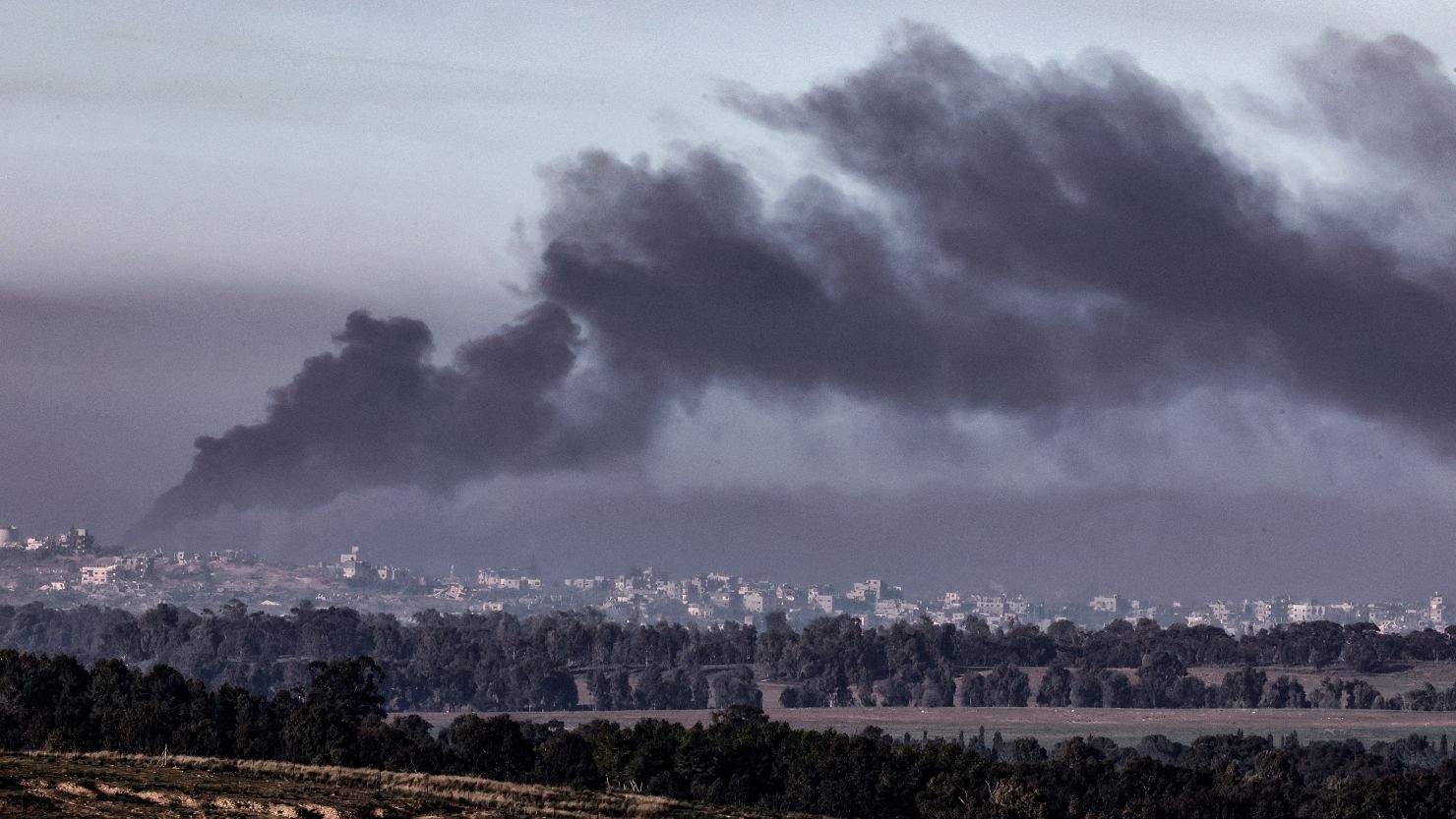
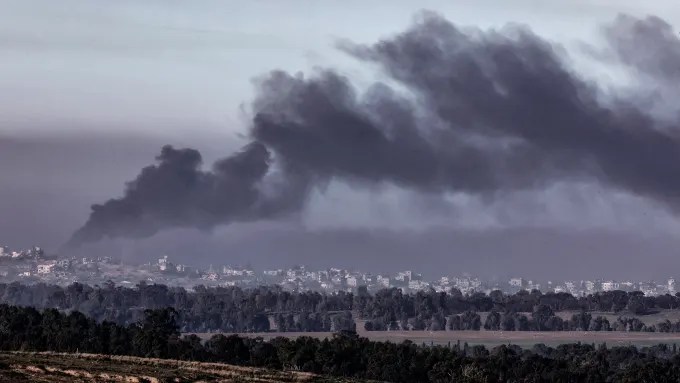
A picture taken from a position in southern Israel along the border with the Gaza Strip shows smoke billowing during Israeli bombardment on January 4, 2024, amid the ongoing Israel-Hamas war.Jack Guez/AFP/Getty ImagesCNN —
Anxiety mounts every day that a full-scale Middle East war could erupt from the flames of the Israel-Hamas war in Gaza.
null
“We feel and we’re afraid of it,” Lebanese Foreign Minister Abdallah Bou Habib told CNN’s Christiane Amanpour this week. “We don’t want any escalation in the war. … We don’t like a regional war because it’s dangerous to everybody. Dangerous to Lebanon, dangerous to Israel and to the countries surrounding Israel,” he said, adding, “A regional war is bad for everybody.”
But the one thing that could avert such a disaster is that a more expansive conflict may not be in the vital national interests of any of the region’s major powers.
And while key states and extremist groups appear to be walking right up to the brink, there’s still hope that the economic, political and military consequences of an escalation will be so grave, that they will stop just short of escalation.
Almost every day brings another violent incident. On Thursday, for instance, the US carried out a strike in Baghdad that killed a leader from an Iran-backed militia that Washington blames for attacks against US personnel in the region. US troops in Iraq and Syria tasked with keeping a lid on ISIS have repeatedly come under rocket and drone attacks from Tehran’s proxies.
null
Fighting is intensifying between Israel and another pro-Iranian group, Hezbollah, across the Lebanon border. In another alarming sign, Israeli Defense Minister Yoav Gallant on Thursday told US envoy Amos Hochstein that time was running out to create a “new reality” on Israel’s northern border to allow residents there to return to their homes. Israel is, meanwhile, suspected of carrying out an attack on high-ranking Hamas leader, Saleh Al-Arouri, in Beirut, sparking fury among Hezbollah leaders who control the area where he was killed.
In another alarming incident, US forces this week sank three boats belonging to Houthi rebels in the Red Sea, following a series of attacks on commercial shipping. Central Command said American helicopters were fired on first and acted in self-defense. The US and around a dozen allies have launched a maritime task force to protect commercial vessels in critical sea lanes in the area after some shipping firms sent their vessels on a longer, less economical route around Africa.
A double bomb attack this week near the grave of former Iranian intelligence chief Qasem Soleimani, since claimed by ISIS, meanwhile rocked an already tense region and may increase internal pressure on Iran’s government as it plots its wider moves in the Middle East.
Why a wider war could be avoided
Many of the region’s power brokers – including Israel, Iran and Hezbollah – may have the most interest in a high-level of tension stopping just short of war. The worry for the US, however, is that all of this playing with fire could spark another Middle Eastern conflict that could drag in Americans. That’s a scenario the Biden administration is desperate to avoid — especially in an election year.
 GNN24 News