Reforming Nigeria’s Revenue Allocation For Equitable Growth
By Salisu Ibrahim
Nigeria’s fiscal federalism is at a crossroads, demanding urgent reform to drive equitable growth and unlock the country’s full potential.
In the last 30 years, the formula that has been in use, is widely criticized as outdated and unfair, hence the Nation’s revenue allocation system has remained contentious and largely static.
Stakeholders are of the view that in spite of massive changes in the country’s socio-economic landscape, the framework for the Nation’s revenue allocation system is stuck.
This development has been sparking controversy among various interests groups, while reinforcing demands for reform that would be seen as more equitable and sustainable.
To revamp the revenue allocation system and incentivize growth, promote fairness, empower states and drive development, stakeholders, unanimously agreed that Nigeria must adjust the country’s focus from merely “sharing the cake” to “baking the cake”. This, according to experts is what will guarantee growth of the economy and increase revenue generation.
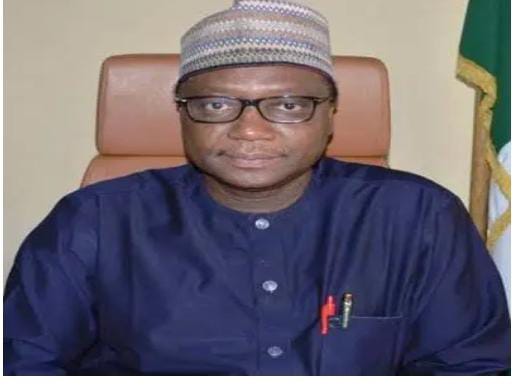
Since, the time for that change is now, the Administration of Dr. Mohammad Bello Shehu, Chairman of the Revenue Mobilization Allocation and Fiscal Commission (RMAFC) has taken the bull by the horn, to address the longstanding challenges that intensified agitations from various interests, and present a glimmer of hope.
The administration has come up with bold and proactive measures towards addressing the looming challenges, putting in place strategic planning towards leveraging collaboration with relevant agencies and experts.
No one is in doubt that the country’s fiscal federalism requires a robust revenue allocation formula that balances federal, state, and local government needs. Dr. Shehu has stepped up measures to address the challenges.
Dr. Shehu’s Administration has come up with an assessment of the situation that will finally settle the matter amicably.
The fact is, prior to this development, Nigeria has over-relied on oil revenue, use of inadequate data, while unable to aggregate competing interests among federal, state, and local governments.
These challenges continue to hinder the nation’s socio-economic development and to a large extent fueling regional tensions.
Dr. Shehu, has therefore introduced a new data-driven formula that reflects Nigeria’s economic and constitutional realities that aim to ensure fair and equitable distribution of resources.
The Nation’s road to fiscal reform has not been without challenges, but under the Administration of Dr. Shehu, a new, data-driven formula has been put in place to reflect the country’s economic and constitutional realities. This new approach prioritizes population, developmental needs, revenue generation capacity, land mass and terrain.
At an interactive session organized by the Revenue Mobilization, Allocation and Fiscal Commission (RMAFC) recently to examine and proffer solutions, experts who participated in the Stakeholders engagement are of the view that the new approach introduced by the administration of Dr. Shehu, will go a long way to increasing the nation’s revenue allocation to states, while improving fiscal autonomy, thereby enhancing mutual cohesion and balancing the socio-economic development of the country.
The new formula will enable governments to deliver essential services like education, healthcare, and infrastructure and empowers subnational governments to meet their constitutional obligations effectively while maintaining national cohesion and macroeconomic stability.
According to Dr. Shehu,the idea is to set in motion, strategies for overcoming existing challenges, reflecting Nigeria’s fiscal responsibilities, while addressing issues of demographic shifts, and governance realities, taking into consideration, the challenge of inadequate data, over-reliance on oil revenue, and competing interests that have made it difficult to fairly address various concerns.
What stands out so far is that the Commission under Dr. Shehu has developed a fair and far reaching measures, accepted by various experts and stakeholders.
So far, Nigeria’s revenue allocation is having a robust reform, under Dr. Shehu’s Administration. It is making significant strides that’s aiming to drive development fairly and equitably, by diversifying revenue sources, reducing dependency on oil revenue, while ensuring equitable distribution.
It’s therefore time for Nigerians to approach the dialogue as custodians of a shared destiny, while prioritizing the nation’s future over individual interests.
Salisu Ibrahim contributed this piece from Kano, could be reached on faccageltd10@gmail.com
 GNN24 News