
HON. ABUBAKAR UMAR ABDULLAHI ACCEPTS CALL TO CONTEST FOR FCT SENATE SEAT
HON. ABUBAKAR UMAR ABDULLAHI ACCEPTS CALL TO CONTEST FOR FCT SENATE SEAT
FCT-Abuja — Following a series of consultations and passionate appeals from stakeholders, youth, women, and the good people of the Federal Capital Territory (FCT), Hon. Abubakar Umar Abdullahi has formally accepted the call to serve.
In a statement released today, Hon. Abdullahi declared his intention to contest for the FCT Senate seat at the National Assembly, pledging to represent the interests, aspirations, and future of all residents of the FCT with dedication and integrity.
“I, Hon. Abubakar Umar Abdullahi, humbly answer the call of the good people of the FCT and hereby declare my intention to contest for the position of Senator to represent our great territory at the National Assembly,” he stated.
He expressed deep gratitude to all supporters and well-wishers:
“I sincerely appreciate each and every one of you for your trust, confidence, and belief in my leadership.”
Hon. Abubakar Umar Abdullahi, emphasized his belief in divine guidance and leadership: “Leadership comes from Almighty Allah, and He grants it to whom He wills. We pray that He makes us the best choice and grants us victory. Ameen.”
He concluded with a call for unity and collective progress:
“Together, we can make the FCT greater.”
Signed:
Hon. Abubakar Umar Abdullahi
Senatorial Race: Senator Shehu Sani visits Party Excos , Stakeholders in Seven Kaduna LGAs ,Gets Massive Endorsement.

Senatorial Race: Senator Shehu Sani visits Party Excos , Stakeholders in Seven Kaduna LGAs ,Gets Massive Endorsement.
In a significant political development ahead of the 2027 general elections, former senator representing Kaduna Central, Comrade Shehu Sani, has concluded a strategic tour of seven Local Government Areas (LGAs) in Kaduna State, garnering widespread endorsements from party executives and grassroots stakeholders.
The tour, which lasted several days, saw the outspoken rights activist-turned-politician engage directly with ward and local government party officials, community leaders, youth groups, and women’s associations. The LGAs visited include Kaduna North, Kaduna South, Igabi, Chikun, Kajuru, Kachia, and Birnin Gwari.
At each stop, Sani held consultative meetings with party executives and broader stakeholder groups of the All Progressives Congress (APC), focusing on strategies ahead of the next electoral cycle.
During the engagements, the former lawmaker declared his support for the re-election bids of President Bola Ahmed Tinubu and Kaduna State Governor Uba Sani in 2027.
Stakeholders who spoke with journalists described the meetings as part of efforts to consolidate party unity, rebuild trust, and articulate a forward-looking agenda anchored on inclusivity and good governance.
Party leaders across the seven LGAs passed votes of confidence in Sani, citing his record in legislative advocacy, constituency development, and longstanding human rights activism.
In Igabi LGA, the party chairman described him as “a bridge between the people and government,” highlighting his accessibility and consistency in addressing national issues.
Leaders in Chikun pledged to mobilise support, describing Sani as “a voice for the voiceless and defender of democratic values,” while recalling his intervention during disputes linked to the proposed demolition of the Gbagi-Villa community by former Kaduna Governor,Mal. Nasir Elrufai.
Similar sentiments were echoed in Birnin Gwari, where community leaders commended his contributions to local development, including support for educational and healthcare infrastructure, as well as his vocal stance on insecurity.
In Kajuru, stakeholders recounted his advocacy during periods of heightened violence in the area, noting his role in amplifying the plight of affected communities.
Women groups at the meetings also expressed solidarity, citing empowerment programmes initiated during his tenure and his consistent advocacy for social justice and inclusion.
Addressing stakeholders, Sani reaffirmed his commitment to strengthening party cohesion and tackling key challenges such as insecurity, unemployment, infrastructural deficits, and the need for quality representation.
“We must rebuild our political structures from the grassroots. The strength of any democracy lies in its people. I am here to listen, to learn, and to work with you for a better future,” he said.
He further emphasised the importance of collective action in addressing insecurity, particularly in rural communities, while advocating policies that expand economic opportunities for young people.
Information gathered revealed that the tour reflects a deliberate effort to reconnect with the grassroots and reassert relevance in Kaduna’s evolving political landscape.
Findings also indicate that endorsements at the local government level remain critical indicators of political viability in the state, known for its complex and competitive alignments.
Although Sani is widely considered a grassroots politician, the scale of endorsements and mobilisation recorded during the tour suggests growing momentum around his potential comeback.
For now, the outcome of the visits has not only reaffirmed his political influence, but also underscored the enduring importance of grassroots engagement in Nigeria’s democratic process.
FG Flays Off 2MW Solar Mini -Grid, Commissions 200 Street Lights At ADUSTECH, Wudil, Kano.

FG Flays Off 2MW Solar Mini -Grid, Commissions 200 Street Lights At ADUSTECH, Wudil, Kano.
Renames Engineering Faculty Complex As Dr. Abdullahi Mustapha Complex.
To marki a significant step in expanding renewable energy deployment across Nigeria’s tertiary institutions, Nigeria’s Minister of Innovation, Science and Technology, Dr. Kingsley Tochukwu Udeh, alongside the Director-General and Chief Executive Officer of the Energy Commission of Nigeria (ECN), Dr. Abdullahi Mustapha, flagged off a 2-megawatt solar mini-grid project and commissioned 200 solar-powered streetlights at Aliko Dangote University of Science and Technology (ADUSTECH), Wudil, Kano State.
The intervention, implemented under ECN’s renewable energy and sustainable power programme, is aimed at improving electricity supply on campus, enhancing security through solar-powered lighting, and strengthening research and innovation in clean energy technologies.
Speaking at the event, the Minister commended ECN’s technical leadership, noting that, “The Energy Commission of Nigeria has done exemplary technical work to bring us to this point, following rigorousT energy audits, demand assessments, and validated system specifications.”
He further stressed accountability and timely delivery, stating that, “The contractor has a clear, firm mandate:to deliver within three months, to specification, with no tolerance for variation, and my ministry will hold them to that mandate.
The highlight of the event was the formal renaming of the Engineering Faculty Complex as the Dr. Abdullahi Mustapha Complex, in recognition of his contributions to national energy development, institutional collaboration, and the advancement of renewable energy solutions in Nigeria.
The Vice-Chancellor, Professor Musa Tukur Yakasai, also honoured the Director-General, Dr. Abdullahi Mustapha, with an Outstanding Award, noting that the recognition reflects his exceptional achievements and enduring impact in the energy sector.
Dr. Mustapha, who was among the 2009 graduating class of the university’s Faculty of Engineering, described the moment as both significant and symbolic, reflecting a full-circle journey from student to national energy leader.
The ceremony was attended by the Emir of Gaya, Alhaji Aliyu Abdulkadir; the Vice-Chancellor, Professor Musa Tukur Yakasai; and the Director-General of the Sheda Science and Technology Complex (SHESTCO), Dr. Magaji Da’u Aliyu.
Speaking, Dr. Mustapha reaffirmed ECN’s commitment to accelerating Nigeria’s energy transition through practical, impact-driven projects that expand access to clean and reliable electricity, particularly within educational institutions.
He noted that the 2MW solar mini-grid represents a scalable model for decentralized energy solutions, while the 200 solar-powered streetlights will significantly improve safety and extend academic and social activities within the university environment.
The Director-General sincerely appreciated His Excellency, President Bola Ahmed Tinubu, for this laudable initiative, which continues to drive sustainable energy development and expand access to clean power across the nation.
How a Banquet Hall United Kaduna State

How a Banquet Hall United Kaduna State
On April 22, dignitaries from across Nigeria’s political, traditional, and socio-economic spectrum converged on Kaduna for an event that was as symbolic as it was historic the commissioning of the state’s newly constructed Banquet Hall.
For the first time since Kaduna State’s creation in 1967, former governors including Ahmed Mohammed Makarfi, Namadi Sambo, and Mukhtar Ramalan Yero,gathered under one roof alongside an array of political leaders, traditional rulers, and stakeholders. The moment was more than ceremonial; it was deeply symbolic of reconciliation and unity.
At the heart of this convergence is a vision championed by Governor Uba Sani to create a space deliberately designed to foster dialogue, partnerships, and investment.
Beyond Steel and Glass
By all appearances, the Banquet Hall is an architectural statement,an imposing structure of steel and glass built with ambition. Yet beyond its physical presence, it represents something far more profound: a renewed civic identity for a state long shaped by diversity and complexity.
The facility, inaugurated by Vice President Kashim Shettima at Sir Kashim Ibrahim House, was not merely unveiled as another public building. It was introduced as a strategic instrument for governance,one designed to bring people together under a shared roof.
Named after Abba Kyari, the state-of-the-art hall boasts a seating capacity of about 1,300 and spans approximately 2.7 hectares. It fills a long-standing infrastructural gap in Kaduna, providing a venue capable of hosting high-level engagements,from diplomatic meetings to cultural exhibitions and investment summits.
A Space for Dialogue in a Complex State
Kaduna has historically held a central role in Nigeria’s political and socio-economic landscape. However, like many states in northern Nigeria, it has also faced challenges, ethno-religious tensions, security concerns, and political divisions.
Against this backdrop, the Banquet Hall emerges as more than a venue; it is a deliberate attempt to create a shared civic space.
Governor Sani emphasized during the commissioning that the project is not just about infrastructure, but about strengthening governance and encouraging meaningful engagement.
“This is a strategic investment in institutional capacity,” he said, underscoring its role in fostering policy dialogue and partnerships.
By hosting events such as the Nigerian Institute of Public Relations Week, intergovernmental forums, and stakeholder engagements, the hall provides a neutral ground where individuals from diverse backgrounds can interact constructively.
Repositioning Kaduna on the Global Stage
Central to Governor Sani’s broader vision is repositioning Kaduna as a hub for national and international engagement. The Banquet Hall is a cornerstone of that ambition.
Designed to meet global standards, the facility is expected to attract conferences, diplomatic missions, and investors,activities that can stimulate economic growth while reshaping perceptions about the state.
Vice President Shettima described the project as a reflection of “purposeful leadership,” noting its potential to strengthen institutions and deepen national cohesion.
Unity Through Shared Experience
Unity is rarely achieved through rhetoric alone,it is built through shared experiences. The Banquet Hall provides precisely that opportunity.
Each event hosted within its walls, whether a policy dialogue, cultural showcase, or regional summit,adds to a growing narrative: that Kaduna is not merely defined by its challenges, but by its capacity to serve as a meeting point of ideas and opportunities.
Stakeholders present at the commissioning described the project as a “magnificent achievement” and a “strategic investment in governance,” highlighting its potential to redefine public engagement in the state.
A Political Statement in Concrete Form
Infrastructure often carries political meaning, and this project is no exception. For Governor Sani, the Banquet Hall signals a shift toward inclusive governance, one rooted in openness, communication, and institutional strength.
It also reflects a deliberate effort to rebuild trust. By investing in a space designed for interaction and accessibility, the administration is making a clear statement: governance must be participatory and visible.
The Road Ahead
While a single structure cannot resolve all of Kaduna’s challenges, it can set a tone. The true measure of the Banquet Hall’s impact will lie in how it is utilized, how often it hosts meaningful dialogue, how inclusive those conversations are, and how effectively they translate into tangible outcomes for citizens.
If fully leveraged, the facility could become a cornerstone of Kaduna’s transformation, a place where differences are negotiated, partnerships are forged, and unity is actively practiced.
In a region often defined by its divisions, the Kaduna Banquet Hall offers a different narrative, one of convergence, possibility, and shared purpose.
Sometimes, unity begins with something as simple and as powerful as bringing people together in the same room.
By Uba Sani Continuity Project
RE: BASELESS ALLEGATIONS BY FLORIDA STATE REPRESENTATIVE KIMBERLY DANIELS AGAINST HON. DR. BELLO MATAWALLE, MINISTER OF STATE FOR DEFENCE

NINETEEN SEVENTEEN NORTHERN CONSENSUS MOVEMENT FOR PEACE, UNITY, EMPOWERMENT AND DEVELOPMENT INITIATIVE
Working Towards the Development of the North and Northerners Across Nigeria and in the Diaspora
PRESS RELEASE
Date: April 22, 2026
Ref: 17NCM/PR/04/2026/07
RE: BASELESS ALLEGATIONS BY FLORIDA STATE REPRESENTATIVE KIMBERLY DANIELS AGAINST HON. DR. BELLO MATAWALLE, MINISTER OF STATE FOR DEFENCE
Abuja, FCT – The Nineteen Seventeen Northern Consensus Movement for Peace, Unity, Empowerment and Development Initiative has noted with deep concern and total displeasure the recent public statements credited to Florida State Representative Kimberly Daniels, in which she accused the Hon. Minister of State for Defence, Dr. Bello Matawalle, of complicity in insecurity and terrorism in Nigeria, and further alleged an attempt to bribe her.
We state categorically that these allegations are false, malicious, and completely at variance with the verifiable record of Dr. Bello Matawalle’s service to Nigeria.
1. THE RECORD OF DR. BELLO MATAWALLE ON SECURITY
All Nigerians are aware that Dr. Bello Matawalle has never been part of terrorism, has never sponsored terrorism, and has never supported terrorists in any form.
As Governor of Zamfara State, he deployed every power within his constitutional limit to confront banditry, kidnapping, and terrorism. He initiated security operations, community dialogues, and legal measures to ensure that criminals were arrested and made to face the full wrath of the law. His record is one of action, not complicity.
As Minister of State for Defence under President Bola Ahmed Tinubu, GCFR, he has been a key driver of the Renewed Hope Agenda on security, working tirelessly with the Armed Forces to restore peace across Nigeria, especially in the North West.
2. QUESTIONS DEMANDING ANSWERS
Since Rep. Kimberly Daniels is not a Nigerian, does not reside in Nigeria, and has no first-hand knowledge of Nigeria’s complex security architecture, Nigerians are compelled to ask:
- Who is sponsoring Kimberly Daniels? Who is feeding her these fictitious narratives?
- What is her interest in Nigeria’s internal security matters, which are constitutionally outside her legislative jurisdiction in the State of Florida?
- Why the sustained propaganda against Dr. Bello Matawalle? What do she and her collaborators seek to achieve?
- Is this an attempt to tarnish the image of a performing minister who has been mobilizing stakeholders, youth groups, women groups, and political leaders across the North West to support President Tinubu’s development and security efforts?
- Is this a proxy attack on the administration of President Bola Ahmed Tinubu, GCFR, ahead of 2027, using a foreign legislator to launder domestic political mischief?
3. OUR POSITION
The Nineteen Seventeen Northern Consensus Movement, working for peace, unity, and development of the North and Northerners, hereby states:
a. We reject in totality the unfounded allegations made by Rep. Kimberly Daniels.
b. We challenge Rep. Daniels to focus on her legislative duties in Florida and allow Nigeria and Nigerians to solve our problems through our institutions and leadership.
c. We caution foreign actors against being used as tools by unpatriotic elements who seek to undermine Nigeria’s sovereignty and the integrity of public officials.
d. We stand with Dr. Bello Matawalle and affirm his contributions to fighting insecurity and his ongoing work to secure Nigeria, revive the economy, and deliver infrastructure under President Tinubu.
4. CONCLUSION
Nigeria’s security challenges are real, and the Federal Government is addressing them daily. What we do not need is external misinformation that emboldens criminals and demoralizes our troops and citizens.
We urge Rep. Kimberly Daniels to disclose who is briefing her, and on what evidence she bases these grave allegations. Until then, her statements will be regarded as external interference built on propaganda.
Nigeria will solve Nigeria’s problems, in Nigeria’s way, under Nigerian leadership.
Signed:
Comrade Awwal Abdullahi Aliyu
National President
Nineteen Seventeen Northern Consensus Movement for Peace, Unity, Empowerment and Development Initiative
2027: Atiku, Yari Hold Closed-Door Meeting in Abuja

2027: Atiku, Yari Hold Closed-Door Meeting in Abuja
Former Vice President, Atiku Abubakar, on Tuesday held a private meeting with former Zamfara State Governor and Senator representing Zamfara West, Abdulaziz Yari, in Abuja.
The meeting, reportedly held at Atiku’s residence, was conducted behind closed doors, with no access granted to journalists.
According to a report by Daily Trust and eachored by DCL Hausa both political figures declined to speak to the media after the engagement. As of the time of filing this report, no official statement had been issued to clarify the purpose of the meeting.
While details remain undisclosed, political observers suggest the engagement may not be unconnected with ongoing alignments and consultations ahead of the 2027 general elections.
Atiku and Yari are currently not members of the same political party, a development that has further fueled speculation about possible cross-party consultations, particularly within the northern political bloc and in relation to 2027 President .
Petitioners Seek Reconstitution of FCT Area Council Election Tribunal Over Legal Discrepancy

Petitioners Seek Reconstitution of FCT Area Council Election Tribunal Over Legal Discrepancy
ABUJA— A formal application has been submitted to the Chief Judge of the High Court of the Federal Capital Territory, Honourable Justice Baba Yusuf, seeking the urgent reconstitution of the Area Council Election Petition Tribunal. The request highlights a critical legal conflict regarding the tribunal’s current membership and the newly enacted
Electoral Act, 2026.
The application was filed by Chris Kelechi Udeoyibo, Esq. of KEL ATTORNEYS on behalf of Alhaji Usman Yahaya, the All Progressives Congress (APC) candidate for the Gwagwalada Chairmanship seat. Yahaya is currently challenging the election victory of Mohammed Kasim of the Peoples Democratic Party (PDP).
The core of the petition rests on a timing issue between the old and new electoral frameworks. While the tribunal was originally formed under the Electoral Act, 2022, that law was repealed and replaced by the Electoral Act, 2026, which was signed into law on February 18, 2026—just three days before the Area Council elections.
The petitioner argue that the current panel, consisting of Chief Magistrate Lateef Abolaji (Chairman), Chief Magistrate Fatima Malo Nadoma (Member I), and Charles Abalaka Esq. (Member II), no longer meets the statutory requirements of the extant law.
According to the petition, the shift from the 2022 Act to the 2026 Act introduced significant changes to the qualification of tribunal members.
The petitioners further maintain that the “improper constitution” of the tribunal is a jurisdictional defect. In Nigerian law, jurisdiction is considered the “lifeblood” of adjudication; any proceedings conducted without it, regardless of how thorough they may be, are legally null and void.
Notably, the 1st and 2nd Respondents in the case have also raised similar concerns through separate Notices of Preliminary Objection, questioning the competence of the current tribunal to hear the matter.
Time seem to be of a factor of increasing concern for the legal teams involved. Under Section 135 (7)of the Electoral Act 2026, the tribunal has a strict 90-day window from the date of filing to deliver a judgment.
Petition was filed March 13, 2026
Time Elapsed: 36 days, Time Remaining:54 days .With Pre-Hearing Sessions scheduled to begin on April 24, 2026, the petitioners are urging the Chief Judge to act swiftly. They fear that if the tribunal proceeds as currently constituted, it will set the stage for a lengthy legal process that is destined to be struck out for lack of jurisdiction, thereby compromising the integrity of the democratic process and the pursuit of justice.
The application concludes by requesting the immediate dissolution and reconstitution of the panel to align with the Electoral Act, 2026.
Dr. Mustapha Abdullahi: A Driving Force in the Renewed Hope Ambassadors Team

Dr. Mustapha Abdullahi: A Driving Force in the Renewed Hope Ambassadors Team
In Nigeria’s dynamic political landscape, technocrats who can bridge governance and grassroots mobilization are increasingly valuable.
Dr. Mustapha Abdullahi, Director-General of the Energy Commission of Nigeria (ECN), has emerged as one of such figures—leveraging his administrative influence and policy visibility to support the political momentum behind Bola Ahmed Tinubu and the broader Renewed Hope agenda.
While Dr. Abdullahi’s primary mandate lies within the energy sector, his role has evolved beyond technical administration into strategic political engagement.
⁰As a member of the Renewed Hope Ambassadors Team, he contributes to shaping narratives around governance performance, particularly in areas tied to energy reform and infrastructure development—key pillars of President Tinubu’s administration.
His ability to communicate policy outcomes in relatable terms has positioned him as an effective advocate for continuity in leadership.
A central element of his political relevance is the alignment between energy sector progress and electoral confidence. Under his stewardship, initiatives tied to renewable energy expansion, rural electrification, and energy policy coordination have become part of the administration’s broader performance story.
These efforts, whether directly political or not, serve as tangible indicators that can influence public perception ahead of future elections.
Dr. Abdullahi’s approach reflects a calculated understanding of Nigeria’s political environment, where development outcomes often shape voter sentiment.
By highlighting improvements in energy access and sustainability, he indirectly strengthens the case for a second term for President Tinubu. His engagements—ranging from policy forums to stakeholder meetings—often reinforce the narrative that continuity is essential for consolidating ongoing reforms.
Within the Renewed Hope Ambassadors Team, his role extends to mobilization among professional and policy-oriented audiences. Unlike traditional political actors, Dr. Abdullahi brings a technocratic voice that appeals to intellectuals, industry stakeholders, and young professionals.
This expands the administration’s support base beyond conventional political structures, adding credibility to its reform agenda.
Moreover, his visibility in national discourse contributes to shaping elite opinion—an often overlooked but critical component of electoral success. By maintaining a consistent message around progress, innovation, and long-term planning, Dr. Abdullahi helps anchor the administration’s image as forward-looking and results-driven. This is particularly important in a political climate where public trust must be continuously earned.
Dr. Mustapha Abdullahi stands out as more than a policy administrator; he is a strategic contributor to the political ecosystem surrounding Bola Ahmed Tinubu. Through his role in the Renewed Hope Ambassadors Team, he helps translate governance achievements into political capital, reinforcing the case for continuity and a potential second term.
His influence underscores the growing importance of technocrats in shaping not just policy, but also the narratives that drive electoral success in Nigeria.
Dr. Mustapha Abdullahi contributes to youth and sports development through mentorship, talent identification, and infrastructure development.
He supports grassroots sports, advocates for youth sports policies, and promotes physical activity for health.
His work emphasizes gender inclusivity, community engagement, and collaboration with government and private sectors.
All these has endeared him to the youths and makes convincing the youths to embrace the policies and re-election of President Ahmed Tinubu easy for him, as he has already set the pace for a beautiful relationship with the youths.
Ex Speaker Zailani working against APC in Kaduna State, Group Alleges
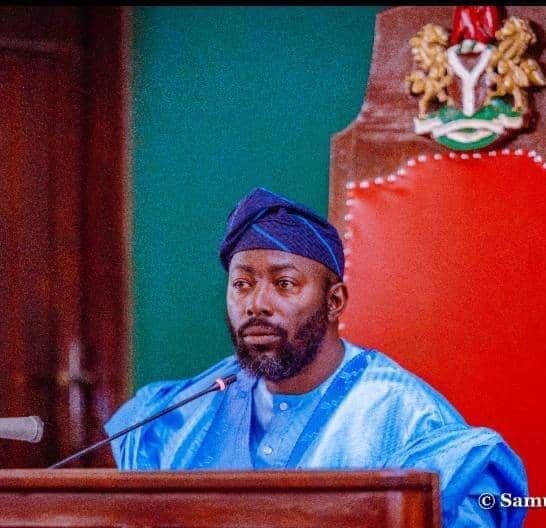
Ex Speaker Zailani working against APC in Kaduna State, Group Alleges
…He lost his ward and local Government to PDP in 2023 Elections.
Fresh political tensions are emerging within the All Progressives Congress (APC) in Kaduna State following allegations that a former Speaker of the State House of Assembly, Yusuf Ibrahim Zailani, is working against the party’s interests ahead of the 2027 general elections.
The claims were made by the Kaduna Progressives Forum (KPF) in a statement signed by its Coordinator, Malam Bala Ibrahim Igabi, who expressed concern over what the group described as Zailani’s “desperate bid” for the Kaduna Central Senatorial seat.
According to the statement, the former Speaker’s political influence has declined significantly, with the group alleging that he failed to deliver his ward and local government area to the APC during the 2023 general elections. The forum argued that this development reflects weakening grassroots support in his political base.
“In several constituencies across Kaduna State, the opposition Peoples Democratic Party (PDP) made notable gains, pointing to an increasingly competitive political environment,” the statement noted.
The group also accused Zailani of engaging in actions perceived as detrimental to the unity and electoral strength of the APC in parts of the state. The accusations come amid lingering grievances within the party following the outcome of the 2023 polls.
The 2023 governorship election in Kaduna highlighted the intensity of the contest between the APC and the PDP, with the APC candidate securing victory by a narrow margin of less than one percentage point an outcome widely seen as evidence of a fragile political balance in the state.
Although Zailani won his seat in the State House of Assembly election, concerns persist among party members over internal divisions and the ability of key political figures to effectively mobilise support at the grassroots level.
The KPF further alleged that Zailani recorded minimal achievements during his over two decades in public office and accused him of failing to actively participate in, or support, the party during the Chikun/Kajuru by-election.
Some APC members warned that unresolved internal disputes and alleged anti-party activities could undermine the party’s chances in the 2027 elections.
They called on the party leadership in Kaduna State to investigate the allegations and enforce discipline where necessary to maintain cohesion and strengthen its electoral prospects.
REJOINDER TO THE PRESS STATEMENT BY AREWA YOUTH ASSEMBLY FOR GOOD LEADERSHIP (AYAGL)On Matters Relating to the Military Pensions Board (MPB)

REJOINDER TO THE PRESS STATEMENT BY AREWA YOUTH ASSEMBLY FOR GOOD LEADERSHIP (AYAGL)
On Matters Relating to the Military Pensions Board (MPB)
1. Background & Trigger
Concerned stakeholders, particularly veterans of the Nigerian Armed Forces, have noted the recent press statement by AYAGL on the leadership of the Military Pensions Board. Though AYAGL withdrew its earlier position, its new statement raises fundamental questions of credibility, accountability, and institutional integrity.
2. Questions on AYAGL’s Mandate & Competence
a. What informed AYAGL’s fact-finding mission to the MPB?
b. Who authorized or mandated AYAGL to engage the MPB?
c. What institutional role qualifies AYAGL to inquire into a specialized military pension body?
d. What professional competence does AYAGL possess in military pension administration?
Position:
The MPB is a specialized institution for retired personnel. Engagements must reflect expertise, responsibility, and respect for institutional boundaries.
3. Concerns Over AYAGL’s Reversal
a. Why were facts not verified before AYAGL’s earlier public criticism?
b. What new evidence justified the sudden turnaround?
c. This suggests reactive advocacy, not informed engagement.
d. Who influenced or sponsored AYAGL’s initial position, and what interests were advanced?
e. Having admitted poor verification, were they pressured to retract? If so, by whom and why?
4. Due Process & Jurisdiction
The matter is reportedly before the EFCC and a court of competent jurisdiction. It is not the role of a regional/youth group to mount public defense or prosecution.
Question: On whose behalf is AYAGL attempting to shape public opinion on a matter under due process?
5. Veterans’ Stance: Principles, Not Personalities
a. Veterans are not advocating for any individual. The current MPB Chairman will also become a veteran.
b. The issue is principle, structure, and representation not personalities.
c. Core demand: Affairs of veterans across all services and in the Ministry of Defence should be managed by individuals drawn from the veterans community.
Rationale:
Only those who have served understand retirement transition, delayed entitlements, healthcare challenges, and post-service welfare gaps.
He who wears the shoe knows where it pinches.
6. Global Best Practices Cited
Veteran affairs are best managed by veterans. Examples:
a. USA: Department of Veterans Affairs leadership rooted in military experience.
b. UK: Office for Veterans Affairs veterans’ voices central to policy.
c. Pakistan: Fauji Foundation driven by retired military personnel.
d. South Africa: Department of Military Veterans
strong veteran representation.
e. India & Canada: Veteran ministries rely on former service members.
Conclusion: International practice confirms veterans should manage veterans’ affairs.
7. Message to Serving Personnel
Those dismissing these concerns should note: if global best practices are ignored today, the reality of retirement will bring clarity.
This is foresight, not confrontation.
8. Respect for Presidential Authority
a. Appointment of MPB leadership is the exclusive prerogative of the C-in-C, President Bola Ahmed Tinubu, if he so wish may request the advice of HMoD,
b. The President has unquestionable right to appoint based on national interest, competence, and strategy.
c. However, national interest demands appointments reflect stakeholder realities, particularly veterans’.
9. Institutional Precedents
The National Hydrographic Agency of Nigeria shows retired officers can be retained in leadership where continuity and expertise are required.
10. Concerns About AYAGL’s Role & Priorities
a. Many stakeholders are hearing of AYAGL for the first time, now that MPB is involved.
b. Where has AYAGL been on pressing security issues troop deployment, equipment, welfare in theatres of operation?
c. Instead, AYAGL is dabbling in a matter before investigative and judicial authorities, seeking to shape public opinion.
11. Conclusion
a. The issue is not about individuals but principle, representation, and institutional integrity.
b. Veterans advocate for a system that understands and represents them, not for personalities.
c. Public discourse must be responsible, informed, and respectful of due process.
d. Welfare of those who served must remain paramount, guided by experience, dignity, and globally accepted best practices.
Mamman Danjuma for veterans care forum.

