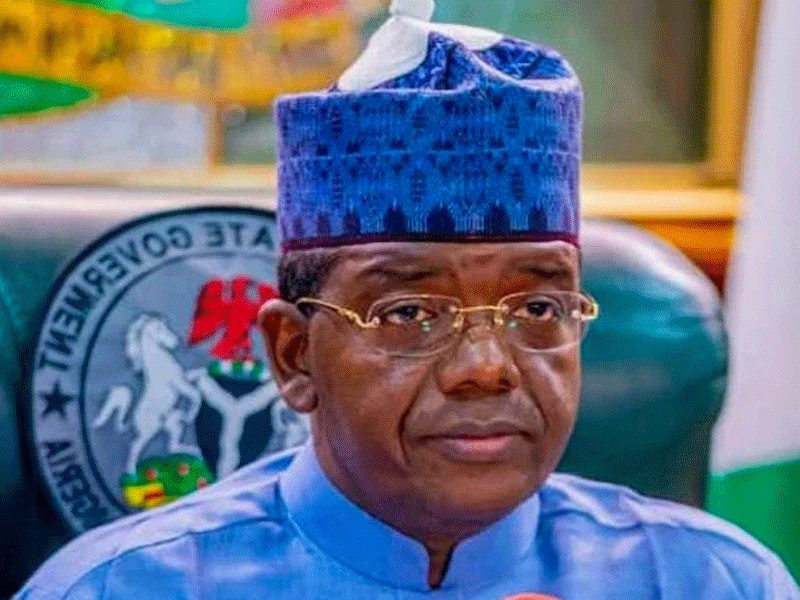
KANO AND THE COST OF POLITICAL ISOLATION

KANO AND THE COST OF POLITICAL ISOLATION

Barrister Aminu Hussaini, in this piece, as his personal opinion, examined Kano’s political history, arguing that Kano, as a hub of economic activities in Northern Nigeria, and a Powerful political bloc in the region, must wake up and play politics not only with a passion but with pragmatism, purpose and strategic alignment with the centre that can deliver real results to its people.

Political analysts are of the view that, politics at its core, is not an exercise in sentiment or protest; it is a contest for power, influence and outcomes.

In every democratic system, numbers matter. Coalitions matter. Access matters. Today’s political reality in Nigeria is stark and undeniable: the All Progressives Congress (APC) controls 29 States, while all other parties combined govern just seven.

This imbalance is not cosmetic – it defines the flow of influence, federal attention and development opportunities. Kano State must therefore confront an uncomfortable but necessary truth: strategic alignment with the national majority is no longer optional; it is imperative.

Kano is not a peripheral state. It is Nigeria’s most politically significant Northern State by population, economic activity and historical influence. For decades, Kano has shaped national politics, produced national leaders and acted as a bellwether for political trends in the North. Yet, influence is not sustained by history alone. In modern governance, relevance is maintained by being at the table where decisions are made – not watching from the sidelines.

The federal system rewards cooperation, not isolation. States aligned with the centre enjoy smoother access to federal interventions, accelerated approvals for infrastructure projects, stronger representation in national policymaking and enhanced bargaining power within intergovernmental forums.

This is not a partisan fantasy; it is political reality, observable across administrations and parties since 1999. When a party dominates both the centre and the majority of States, internal party mechanisms-not opposition platforms – become the main arena where national priorities are negotiated.

Those arguing for political “independence” or “romantic opposition” must answer a simple question: what tangible benefits has political isolation delivered to Kano in recent years? Opposition politics may energize rallies and social media debates, but it rarely translates into handout roads, rail, power infrastructure, industrial clusters or sustained federal investments. Development is not awarded for moral positioning; it is negotiated through power structures.

Kano’s past offers sobering lessons about the price of strained federal relations. During the second republic, the state was governed by Muhammad Abubakar Rimi of the People’s Redemption Party (PRP); an ideologically driven but federally isolated administration. At the centre, the National Party of Nigeria (NPN) controlled federal power. The result was an unprecedented intervention: President Shehu Shagari appointed Lawal Kaita as presidential liaison officer in Kano, effectively supervising federal agencies in the state and asserting central authority over federal interests. This arrangement, widely seen as a response to Rimi’s confrontational posture, underscored how political estrangement can weaken a state’s bargaining power and invite federal encroachment rather than cooperation.

The lesson resurfaced decades later under Ibrahim Shekarau’s administration (2003–2011). Governing Kano while the PDP dominated the centre, Shekarau’s government often found itself outside the inner circles where federal priorities were shaped. While Kano did not grind to a halt, it increasingly lost momentum in attracting major federal projects and strategic appointments compared to states aligned with the ruling party. The absence of strong political synergy meant slower access to opportunities that flowed more easily to allied states.

In contemporary times, the pattern remains familiar.
The current Kano State administration has been marked by frequent friction with federal institutions, ranging from disputes with federal security agencies to open political hostilities with influential figures within the ruling establishment. These tensions have created an atmosphere of distrust and chaos, diverting energy from development-driven engagement and weakening Kano’s ability to negotiate effectively for federal investments, institutional support and national influence. These episodes are not coincidences; they reveal a consistent structural reality of Nigerian politics.

It is also important to dispel the myth that alignment equals surrender. Strategic alignment does not mean abandoning Kano’s identity, interests or bargaining power. On the contrary, Kano’s size and electoral weight make it a powerful bloc within any dominant political platform. Aligning with the majority offers Kano the opportunity to shape national policy from within, influence party direction and secure leadership positions that directly benefit the state’s long-term development agenda.

The numbers speak loudly. With 29 APC-governed states, national consensus within the ruling party effectively determines legislative priorities, budgetary focus and policy direction. Remaining outside this consensus does not make Kano principled; it makes Kano peripheral. In a country as competitive and resource-constrained as Nigeria, no serious state can afford such self-marginalization.

Kano’s political elite and stakeholders must therefore ask not what feels emotionally satisfying, but what delivers results. Roads, water projects, education funding, healthcare upgrades, security interventions and economic revitalization require federal-state synergy. That synergy is strongest when political alignment exists.

History favours those who read the moment correctly. Kano has never been a follower state-it has always been a strategic one. The present moment calls for pragmatism over posturing, realism over rhetoric and outcomes over outrage. Aligning with the national majority is not about party colors; it is about securing Kano’s rightful place in Nigeria’s future.

Politics is arithmetic before it is poetry. Today, the arithmetic is clear: 29 versus 7. Kano cannot afford to be sidelined-not in 2026; not in the years leading to the 2027 elections. The State’s political elite, business community, civil society and traditional institutions must prioritize strategic engagement with political majority at the centre. This is not to sacrifice local identity or autonomy-but to secure the tangible dividends of governance: infrastructure, jobs, investment, healthcare, education and security.

History has taught Kano painful lessons about the cost of opposing the centre without sufficient leverage. It is time to play politics not only with passion but with pragmatism, purpose and strategic alignment that delivers real results to the people. Kano must wake up, recalibrate and choose strategic relevance over symbolic resistance.

Barrister Aminu Hussaini Sagagi could be reached on- +234 8033742424, aminuhussaini173@gmail.com

NIGERIA’S LAUDABLE ACHIEVEMENTS IN THE RENEWABLE ENERGY SECTOR WITH ABDULLAHI MUSTAPHA Ph.D, DG ENERGY COMMISSION OF NIGERIA

NIGERIA’S LAUDABLE ACHIEVEMENTS IN THE RENEWABLE ENERGY SECTOR WITH ABDULLAHI MUSTAPHA Ph.D, DG ENERGY COMMISSION OF NIGERIA

In the last two years of the administration of President Bola Ahmed Tinubu’s leadership, Nigerians and foreigners alike have witnessed a huge surge in the country’s leap towards visible and sustainable growth in the renewable energy sector. This becomes more evident as the country moves towards closing the energy gap, thereby, ensuring power stability for all Nigerians.

Under the Renewed Hope Agenda, the federal government, through the Energy Commission of Nigeria, ECN led by the indefatigable Dr. Abdullahi Mustapha as Director General/Chief Executive, introduced the Renewable Energy; brining into the homes of Nigerians, the gains of solarization ensuring that critical sectors of the economy enjoy stable power supply.

According to Dr. Mustapha, “Renewable energy (RE) solutions present a practical and sustainable way to address the challenges created by persistent national grid collapses and other energy crises. The national grid in its current state requires more reliable alternative within the power generation ecosystem.

He restated the need to infuse RE solutions, such as solar energy, wind power and hydropower, remains crucial in addressing current power generation challenges, stressing that “the federal government has already begun to implement the National Renewable Energy Roadmap (NRER) developed by the Energy Commission of Nigeria (ECN) in collaboration with the International Renewable Energy Agency (IRENA) with a clear aim of providing alternative power that reduce reliance on the centralized grid while maintaining at least an average power supply through decentralization.”.

According to Dr. Mustapha, “Decentralized RE systems will play a key role in bridging the current power supply gap. For instance, photovoltaic solar and onshore wind systems can power rural and semi-urban areas often neglected by the national grid. These systems will not only provide consistent electricity but also empower rural economies, enabling micro-businesses to grow and improving access to essential services such as healthcare and education. With meaningful local and global collaborations, we can achieve the optimal installed capacity of electricity by leveraging on RE sources to ensure energy stability across the country”

He enthused the capacity and capability of the Energy Commission of Nigeria, under his stewardship, to act as a catalyst, which would champion policies that attract private sector investment, build local capacity, and prioritize renewable energy integration through extended collaborations with stakeholders, governments, and global communities.

The ECN Director General reiterated that the National Energy Policy and its Master Plan recently unveiled by the Federal Government through ECN, seek to increase the renewable electricity generation by aggressively pursuing RE energy integration into the Nation’s energy mix.

“The RE systems have become more efficient and cheaper over the years, a paradigm shift to renewable energy will substantially close the energy gaps, reduce grid disruptions, and accelerate its journey toward energy independence and economic growth”, Abdullahi stated.

Since his assumption into office as Director General of the ECN, Dr. Mustapha Abdullahi has carved a niche for himself with stakeholders applauding his enviable strides in repositioning the Commission from its near-obscurity where it had been plunged into in the decades past.

President Bola Ahmed Tinubu, in his choice of Dr. Mustapha Abdullahi as Chief Executive of the Energy Commission of Nigeria, foresaw the qualities; passion, dedication and most especially, capacity to actualize the Renewed Hope Agenda; his campaign catch-phrase that aims to retool the country and ensure that it takes its rightful [lace in the comity of nations in the global society.

Dr. Abdullahi, shortly after his assumption, set to task in delivering on the mandate and this, according to industry watchers, leaves one without to a choice but to affirm that President Bola Ahmed Tinubu, a man known to assemble quality hands to deliver on his set tasks, indeed made the right choice.

Followers of the trajectory of President Tinubu’s governance style express their confidence in his administration to rewrite the Nigerian story and return the nation to the path of sustainable growth development and shared prosperity. His stern advisory to his appointees to match his vision in delivering on the Renewed Hope Initiative of his administration, most certainly is bearing fruit with many of these appointees, creating landmark achievements in their various areas of responsibilities.

As a visionary, Dr. Abdullahi on assumption of office, did not hesitate to point out his direction and focus; “delivering on Mr. President’s mandate in line with the Renewed Hope Agenda, comes first as far as the Energy Commission of Nigeria is concerned”, stressing that; “Under my stewardship and with the support of our dedicated staff and stakeholders,

the ECN as the Lead Agency in the country’s push for energy transition will set the tone for economic development based on progressive innovation and policy initiatives as envisioned by President Bola Ahmed Tinubu.”

Indeed, industry watchers and stakeholders in the sector have continued to applaud his every stride which, in their varying opinions, will set the pace for a new dawn for the country’s energy economy, as he is indeed poised to create a new face for the sector with result driven policies and quality leadership that will attract positive investment, growth and sustainable development for the industry.

The agenda of Dr. Mustapha Abdullahi, since emerging as the DG of the Commission has remained hinged on five points: vis-à-vis;

  • Integration of the Renewable and Alternative Energy Policy Structure into the Mainstream National Energy Architecture.
  • Immediate facilitation of the actualization of the Energy Transition Plan
  • Facilitation of Research and Development Funding and Partnership Initiatives in the Energy Sector.
  • Review of extant Energy Policies, Initiatives and Frameworks to stimulate economic development.
  • Facilitation of improved welfare consideration for staff of the Commission commensurate with standards in the Energy Sector.

While many stakeholders laud the initiative of the Tinubu administration and the decision of President Bola Ahmed Tinubu to take the nations power sector as top priority and then, his choice of Mustapha Abdullahi Ph.D. to head the ECN, others say it that was one of the best moves of the President as the Commission has moved away from its near obscurity to a point of global recognition following the positive push of the Commission, led by the indefatigable Director General.

With his commitment, dedication and zeal to actualize the mandate of the Commission as dictated by the Renewed Hope Agenda, Abdullahi has displayed tremendous capacity to make a positive mark. These attributes have seen him engage with prominent global leaders in discussions on Renewable Energy. Of great note is his outstanding performance at the annual global event, #COP28UAE, and other international events including the G20 Energy Summit in Brasilia, Brazil where he spoke on behalf of Africa, emphasizing energy transitions and net-zero emissions, and in Cape Town, South Africa where he presented a paper at the Africa Energy Indaba Summit alongside other global energy experts.

His thirst for achieving excellence in service delivery or quality leadership deliverables has remained a point of referencing with the energy sector. From providing leadership for West African sub-region and beyond, to leading advocacy on energy transition from fossil fuel in international space, Mustapha Abdullahi has displayed a strong resolve to exploring renewable and alternative energy to provide homegrown solutions to the energy needs of the Nigerian people.

As the new Chairman, Nigeria National Committee on World Energy Council (NNC WEC), Dr. Mustapha, it is recalled, had proposed to activate mechanisms with the Economic Community of West African States (ECOWAS) geared towards instauration of novel action plans that would not only change the ugly story of the energy economy of the country, but also that of West Africa sub-region and Africa as a whole. He is, at the moment working through tapping opportunities through the West African Power Pool (WAPP), an institution within the ECOWAS to chart a new cause for the energy economy for the country, Africans

Knowing and appreciating the needs of his team and workers around him, Abdullahi appreciates the fact that securing the efficiency of your colleagues and workers alike, is hinged, often times on staff motivation at work place. “A value-driven leadership spurs its workforce to efficiency and optimal performance through incentives and conducive working environment.” He is a leader with ample experience that cuts across the globe recognizes workers’ psyche at work, especially when such workforce is motivated. He understands that remuneration is a major factor in the determination of a worker’s productivity. He is aware of the near-zero motivation and he was prepared to address the situation frontally by making the necessary moves that would ultimately enliven the workers’ spirit and gear them towards the overall success of his leadership at the Commission. As an expert, Abdullahi recognizes the value of human capital development in driving positive change and understands that the Commission is largely knowledge-driven,

With a leadership that encourages inclusivity, Dr. Mustapha Abdullahi has ensured that all regions of the country are captured in the activities of the Commission. The groundbreaking ceremony of an Assembly Plant in the Ihunekwagu Autonomous Community, Akpugo in Nkanu West Local Government Area of Enugu State. The event came up as a corollary of the need to boost access to affordable electricity in the country, and to take several communities off the national grid.

In addressing the electricity menace therefore, the visionary Chief Executive of the Energy Commission saw an opportunity in photovoltaic (PV) electricity to provide alternative energy to millions of households. Hence, consolidating the Renewed Hope agenda of Mr. President. Such solar PV module assembling plant which will provide sustainable, reliable, and decentralized power source capable of reaching the remotest part of the country – thereby giving light and hope to Nigerians; one of the initiatives of the Renewed Hope Agenda of the Tinubu’s administration.

Dr. Abdullahi’s leadership on Saturday, August 10, 2024 scored another record breaking milestone the ground-breaking ceremony of Barefoot Renewable Energy College (BRE College), Osara, Kogi State. The concept of a Renewable Energy College was in line with the manifesto of President Tinubu whose party’s agenda is to explore various energy potential of the country, one move that will see the country take a bold leap further into transitioning from fossil-based energy resources to renewable energy. The Barefoot Renewable Energy College was conceptualized to bridge the energy manpower gap, drive innovation, competence, and self-reliance in the renewable energy sector. The future is assured with a safer environment and a cleaner energy.

Under the guidance and leadership of Dr. Mustapha, the Commission collaborated with a number of development partners, international organizations as well as relevant and critical stakeholders such as:

  • The United Nation Environment Programme (UNEP) and Clean Cooling

Collaborative (CCC) on Minimum Energy Performance Standards (MEPS) in the area of

Air-conditioners that aims to reduce carbon emissions, thereby leading to safer environment.

  • Signing up a tripartite wind energy agreement at the #COP28UAE held in Dubai, United Arab Emirates with the Global Wind Energy Council (GWEC) and the Niger State Government.
  • Teaming up with the United Kingdom’s Department for Business, Energy and

Industrial Strategy (BEIS) for energy planning workshop.

  • Collaboration with DEWA and the European Union (EU) delegation on energy transition initiative of his leadership at the Commission.
  • Capacity building of the Commission’s staff with the Economic Community of

West African States (ECOWAS).

  • Entered into partnership agreement with the National Biomass Ethanol

Programme (NBEP) amongst others.

Celebrating such a worthy personality is not out of the ordinary as this gentleman is indeed deserving of commendation and due recognition following his verifiable leadership milestones and footprints that have been firmly etched into the sands of time in the country’s energy space and beyond. It is also, worthy of mention that Dr. Mustapha Abdullahi will lead and coordinate the record breaking Nigeria-Germany $130billion Global Hydrogen Project from the Office of the Vice President of the Federal Republic. Such pedestal does not come on a platter of gold, but of capacity, competence and trust in this jewel from the savannah.

To the discerning eyes, Mustapha Abdullahi is one young gentleman poised for greater heights as he remains focused on delivering on the set goals and mandate of the ENERGY Commission of Nigeria under the guidance of President Asiwaju Bola Ahmed Tinubu, GCFR; a leader of men whose visionary leadership, tenacity, doggedness and strong political will to reshape the country for the collective good of all, remains unshakeable.

Islamic Groups Caution Muslim Leaders Against Meddling in Tax Reform Matters

Islamic Groups Caution Muslim Leaders Against Meddling in Tax Reform Matters

A coalition of Islamic groups has cautioned Muslim leaders and clerics across the country against undue interference in ongoing tax reform discussions, warning that such matters are technical, constitutional and should be handled by relevant government institutions.

The groups, under the umbrella of the Coalition of Islamic Organisations for National Development (CIOND), made their position known in a statement issued on Wednesday, stressing that tax reform policies are economic and administrative issues that should not be politicised or religiously coloured.

According to the statement, signed by the coalition’s National Coordinator, Sheikh Abdulrahman Musa, while Islam encourages justice, accountability and fairness in governance, it does not support the distortion of public policy debates through sentiments that could inflame religious tensions.

“The issue of tax reform is a national economic matter that affects all Nigerians, irrespective of faith or ethnicity. It requires expert analysis, stakeholder engagement and constitutional processes, not emotional or sectarian interventions,” the statement read.

The coalition noted that recent comments by some religious figures risk misleading the public and creating unnecessary suspicion about government policies aimed at strengthening revenue generation and economic stability.

CIOND urged Muslim leaders to focus on their primary responsibilities of moral guidance, peacebuilding and social harmony, rather than making pronouncements on technical fiscal policies beyond their competence.

“Islam upholds knowledge and professionalism. Where policies are being debated, those with the requisite expertise should be allowed to lead the conversation, while religious leaders can contribute by advocating fairness, transparency and protection of the poor,” the group added.

The Islamic groups further called on the Federal Government to intensify public enlightenment on the objectives and safeguards of the proposed tax reforms, to address misinformation and build public trust.

They also appealed to Nigerians to resist attempts to frame economic reforms along religious lines, warning that such narratives could undermine national unity and derail well-intentioned policies.

The coalition reaffirmed its commitment to peaceful coexistence and constructive engagement with government on policies that promote economic growth, social justice and national development.

Salihu Marks Birthday with Cash Donations, Hospital Visits in Adamawa

Salihu Marks Birthday with Cash Donations, Hospital Visits in Adamawa

…empowers Youth, Women with anniversary colloquium

By Tom Garba, Yola

The Zonal Vice Chairman of the All Progressives Congress (APC), North-East, Comrade Mustapha Salihu, has marked his birthday with humanitarian outreach to health facilities and party women leaders across Adamawa State, distributing cash donations and other relief items to patients and beneficiaries.

As part of the initiative, Salihu visited several health institutions, including Rumde Primary Health Care Clinic in Jimeta, Fufore Primary Health Care Hospital, and the Federal Medical Centre (FMC), Yola.

TGNews reports that,patients in the general wards, paediatric units, accident and emergency units, as well as consulting rooms, pharmacy, X-ray and clinical laboratory wards in Fufore received monetary support in envelopes.

At FMC Yola, The officials were received by the hospital management led by the Director, Hajiya Rabi Ali, where he interacted with patients and staff before extending the same tokens to those receiving treatment.

Speaking during the visit to Fufore Primary Health Care Hospital, the Chief Nursing Officer, Phelimon Elija Gabtuda, commended Salihu for the gesture and called on other political leaders to emulate him.

“Mustapha Salihu could be said to be a brother to me as we both originated from Hong Local Government. This good deed of his makes him a very good leader. We pray for leaders who understand the needs of their people and always deliver, even if it is with a little token,” he said.

Gabtuda noted that the condition of the hospital had improved following recent staff employment but appealed for urgent intervention to fix the hospital’s grounded ambulance.

“In emergencies, it becomes very difficult to transport patients or make referrals. Many lives have been at risk due to the use of commercial vehicles. There is also a new structure awaiting commissioning which, if completed, will provide more space for patient management,” he added.

In addition to the hospital visits, Salihu hosted and empowered APC women leaders across the state, describing them as the backbone of the party. Beneficiaries included the state women leader, 21 local government women leaders, 226 ward women leaders and their deputies.

According to details of the donations, the state women leader received ₦200,000, while three state executive members were given ₦150,000 each. The 21 local government women leaders received ₦150,000 each, while their deputies were given ₦200,000 each. The 226 ward women leaders received ₦200,000 each, and their deputies ₦50,000 each.

Salihu also donated ₦2 million each to zonal hospitals in the Northern and Southern zones, and ₦1 million each to three hospitals in the Central zone. He further distributed 25kg bags of rice to women leaders, with each local government receiving 10 bags.

Vice Chairman, APC Central Zone, Alhaji Isa Dagalchi, urged the women leaders to remain honest and committed to the party, while the APC State Chairman, Barrister Idris Shuibu, praised party officials for their dedication and hard work toward the party’s success.

In a further boost to welfare, all 276 women leaders were enrolled in a health insurance scheme, enabling them to pay only ₦1,000 for treatments costing ₦10,000.

The beneficiaries expressed gratitude to Comrade Mustapha Salihu for the support and prayed for continued success in his political and personal endeavours.

Group Dismisses Dangote’s Claims Against NMDPRA Chief, Passes Vote of Confidence on Farouk

Group Dismisses Dangote’s Claims Against NMDPRA Chief, Passes Vote of Confidence on Farouk

The Forum for Good Governance and Economic Development (FGGED) has dismissed recent claims allegedly made by the President of Dangote Group, Alhaji Aliko Dangote, against the Chief Executive Officer of the Nigerian Midstream and Downstream Petroleum Regulatory Authority (NMDPRA), Engr. Farouk Ahmed, describing the allegations as unfounded, misleading and capable of undermining regulatory stability in the petroleum sector.

In a statement issued today and made available to Journalists, the forum said it had carefully reviewed the claims attributed to Dangote and found them to be “lacking in factual basis and unsupported by regulatory or operational realities within the downstream petroleum industry.”

The Forum in the Statement signed by its Secretary,Dr. Abraham Japhet further passed a vote of confidence on Engr. Ahmed, commending his leadership of the NMDPRA and his commitment to transparency, due process and strict adherence to the provisions of the Petroleum Industry Act (PIA).

According to the forum, since assuming office, the NMDPRA under Ahmed has implemented key reforms aimed at sanitising the downstream sector, improving regulatory oversight, ensuring fair competition and protecting the interests of consumers and investors alike.

“The NMDPRA boss has demonstrated professionalism and independence in the discharge of his duties, resisting undue pressure from vested interests while prioritising national interest,” the statement said.

FGGED warned against what it described as attempts by powerful corporate actors to intimidate or discredit regulators in order to secure favourable outcomes, stressing that no individual or company should be allowed to undermine institutions established by law.

The forum urged stakeholders in the oil and gas industry to engage constructively with regulators and utilise established dispute-resolution mechanisms rather than resorting to public statements that could erode investor confidence and destabilise the sector.

It also called on the Federal Government to continue to support the NMDPRA in the effective implementation of the PIA, noting that a strong and independent regulator is critical to the sustainability and growth of Nigeria’s petroleum industry.

The group reaffirmed its support for reforms in the oil and gas sector and pledged to continue to defend public institutions and officials who act in accordance with the law and in the best interest of the country.

Coalition Dares Dangote to Name His Preferred NMDPRA CEO Amid Pressure Allegations

Coalition Dares Dangote to Name His Preferred NMDPRA CEO Amid Pressure Allegations

A group has challenged billionaire industrialist, Aliko Dangote, to publicly disclose who his preferred candidate for the position of Chief Executive Officer of the Nigerian Midstream and Downstream Petroleum Regulatory Authority (NMDPRA) would be, amid allegations of attempts to forcefully edge out the current CEO, Engr. Farouk Ahmed.

The group, operating under the banner of the Coalition for Market Transparency in Energy Reform, alleged in a statement on Wednesday that sustained pressure against the NMDPRA leadership was driven by vested interests seeking to reverse ongoing efforts to open Nigeria’s downstream petroleum sector to healthy competition.

“If Mr. Dangote succeeds in pushing out Engr. Farouk Ahmed, Nigerians deserve to know whose interests the next NMDPRA CEO will serve,” the group said. “Will the successor be a regulator for the market or a proxy for private commercial interests?”

The coalition warned that any attempt to impose a favoured candidate at the NMDPRA would amount to regulatory capture, with grave implications for competition, pricing discipline and long-term investor confidence in the sector.

According to the group, Engr. Ahmed’s tenure has been marked by policies aimed at expanding market participation, reducing single-player dominance and aligning the downstream industry with the liberalisation objectives of the Petroleum Industry Act (PIA).

“These reforms are inconvenient for monopolistic ambitions, but they are essential for market health,” the statement said.

The group alleged that truncating these efforts through leadership manipulation would undermine Nigeria’s post-subsidy reforms and entrench a new form of private-sector dominance in place of the defunct state monopoly.

“It would be dangerous for Nigeria’s energy security to replace decades of NNPC operations with the dominance of one private refinery, no matter how large or locally celebrated,” the coalition added.

The group also questioned the broader implications of allowing powerful investors to influence regulatory leadership, warning that such precedents could discourage both local and foreign investors who rely on predictable, rules-based governance rather than personality-driven regulation.

“If regulators become vulnerable to pressure from dominant market players, smaller investors will exit, competition will collapse, and consumers will ultimately pay the price,” it said.

The coalition urged the Federal Government and relevant oversight institutions to protect the independence of the NMDPRA, stressing that leadership changes, if any, must follow due process and be guided strictly by performance, not private convenience.

“The Nigerian downstream sector does not need a compliant regulator; it needs a courageous one,” the group stated. “Any attempt to impose a CEO who will do the bidding of a single investor would represent a direct assault on market reform.”

Separating Strategy from Sentiment: A Technical Response to the Allegations Against the Minister of State for Defence

Separating Strategy from Sentiment: A Technical Response to the Allegations Against the Minister of State for Defence

By Dr. Awwal Abdullahi Aliyu

In every society grappling with complex security challenges, there is always the temptation to reduce serious policy decisions to simplistic accusations. This is particularly true in environments where politics thrives on narratives rather than facts. The recent allegations linking the Minister of State for Defence Dr. Bello Matawalle to banditry and terrorism fall squarely into this category and deserve a sober, technical and unemotional response.

At the outset, it must be clearly stated that there is a fundamental difference between engagement as a security strategy and collusion as a criminal act. Unfortunately, some commentators have either deliberately or ignorantly blurred this distinction, creating a misleading narrative that does not withstand empirical scrutiny.

Nigeria’s security challenge, especially in the North West, is not conventional warfare. It is asymmetrical, community-embedded and fuelled by poverty, arms proliferation and transnational criminal networks. For this reason, modern counterterrorism doctrine, both globally and locally, recognizes that non-kinetic measures must complement kinetic operations. Dialogue, intelligence penetration, psychological operations, de-radicalization and negotiated disengagement are tools used by states worldwide, including advanced democracies.

The decision by government authorities at the time to open channels of communication with individuals linked to violent networks was not an endorsement of criminality, but a deliberate attempt to dismantle such networks from within. Intelligence-led engagement often requires interfacing with unsavoury actors to extract information, disrupt supply chains and secure the release of abducted citizens. This is standard practice in security operations and cannot logically be equated with sponsorship of crime.

It is also important to emphasize that engagement does not imply immunity. Where individuals involved in peace efforts later violated the law or abused the opportunity extended to them, the state acted decisively. Arrests were made, prosecutions followed, and convictions were secured. This sequence alone dismantles the claim that there was any form of protection or complicity. A government that prosecutes and imprisons offenders cannot, by any stretch of logic, be accused of shielding them.

Another critical fact often ignored by critics is that the insecurity in question predated the tenure of the Minister when he served as a subnational leader. He inherited a deeply rooted crisis, one that had already devastated communities, displaced thousands and crippled economic activity. His administration chose a strategy aimed at reducing civilian casualties first, reopening critical transport routes, restoring markets and allowing farmers and traders to return to their livelihoods. These outcomes were achieved, not by magic, but by a calibrated mix of dialogue and force.

Evidence of this approach’s effectiveness was visible in the reopening of previously inaccessible roads, the revival of major markets, and the release of large numbers of abducted citizens without bloodshed. These outcomes were acknowledged at the time by citizens, traditional leaders, and security experts. It is therefore disingenuous for the same approach, now replicated at the federal level with similar results, to suddenly be rebranded as evidence of sympathy for terrorism.

What is most concerning about the current allegations is their selective application. Similar non-kinetic strategies were adopted by multiple state actors across the region, yet the outrage appears targeted. This selective outrage strongly suggests political motivations rather than genuine concern for national security. It is difficult to escape the conclusion that the Minister’s growing national relevance and proximity to the centre of power have made him a convenient target for political adversaries seeking relevance through controversy.

Security policy must be evaluated by outcomes, not emotions. If lives were preserved, hostages freed and communities stabilized, then the strategy deserves objective assessment, not politicized condemnation. To conflate tactical engagement with criminal complicity is not only intellectually dishonest but also dangerous, as it undermines legitimate security tools and discourages innovation in counterterrorism.

Nigeria’s fight against insecurity requires unity, trust in institutions, and respect for professional judgment. Reckless accusations weaken morale, distract security leadership and hand propaganda victories to violent groups who thrive on division and confusion.

In conclusion, the allegations against the Minister of State for Defence are baseless, speculative and politically fuelled. They collapse when examined against facts, outcomes and established security doctrine. The Minister’s record shows a consistent alignment with the core objective of any responsible government which is the preservation of lives and the restoration of peace.

History will ultimately be kinder to strategies that saved citizens than to voices that sought political gain from national pain. Nigeria must resist the weaponization of insecurity for partisan ends and instead support approaches that blend firmness with intelligence, strength with restraint and force with foresight.

Dr Girei’s Wave of Endorsements Continues to Sweep Across Adamawa as Over 1,000 Coordinators Gather to Strategize

Dr Girei’s Wave of Endorsements Continues to Sweep Across Adamawa as Over 1,000 Coordinators Gather to Strategize

By Tom Garba, Yola

A massive wave of grassroots support for Dr. Salihu Girei Bakari, a prominent Adamawa indigene and aspirant for the 2027 governorship election, continued unabated as over 1,000 coordinators from across the state’s 21 local government areas converged in Ganye for a strategic endorsement rally titled “A New Dawn for Adamawa: Call for Dr. Salihu Girei Bakari.”

The gathering, described by participants as a voluntary movement driven by admiration for Dr. Girei’s past achievements, highlighted his tenure as Executive Chairman of the Adamawa State Universal Basic Education Board (SUBEB/ADSUBEB) and Commissioner for Local Government and Chieftaincy Affairs.

Supporters praised his contributions to education infrastructure, harmonious traditional governance, and inclusive development.

Alhaji Hassan Mamman, the head of the 21 local government coordinators, opened the speeches by emphasizing Dr. Girei’s energy, humble background, and empathy for the poor.

“Dr. Girei is a young man full of energy that can tour the state at any given time. He can’t be accused of being overwhelmed by work,” Mamman said.

He noted that Dr. Girei, having risen from humble beginnings, “knows how it feels to be poor” and remains connected to rural communities.

Mamman further lauded Dr. Girei’s impartiality: “Dr. Girei is someone that doesn’t care about your tribe or religion; he cares only about developing people and the state. He always feels for the needy and is highly educated, a perfect administrator.”

He cited the harmony Dr. Girei fostered among traditional rulers and local government chairmen during his commissionership, ending his term without accusations from any stakeholder.

Highlighting tangible achievements, Mamman pointed to school infrastructure: “All the upstairs and storey buildings you see in our schools across Adamawa State, both in urban and rural areas, were done by him during his time at SUBEB.”

Addressing the coordinators, Mamman stressed integrity: “We selected you based on your records and relationship with the grassroots. You can’t promote a good man if you are not good yourself; you must be clean and honest.”

He underscored the voluntary nature of the movement: “Nobody is getting paid for this. We’ve come from all local governments as volunteers to reciprocate the goodwill Dr. Girei showed our children by ensuring conducive learning environments, even without our prior support. To whom much is given, much is required—we believe he’ll do more as governor.”

Concluding optimistically, Mamman declared: “We don’t have much work to do; Dr. Girei has done it all.”

Other speakers echoed these sentiments. Mr. Tukur Saleh from Girei Local Government said locals “know Dr. Girei very well and can bet their lives on him,” crediting him with enlightening the state on good leadership, quality education for children, and merit-based youth appointments regardless of background or religion.

Mohammed Bajika, popularly known as Hamma Maryam, praised Dr. Girei’s accessibility: “Dr. Girei has no veil—anyone could see him in office.” He revealed that supporters had long urged him to run but he initially declined until “mountain pressure” led him to accept for 2027.

Bajika called on party leadership to consider Dr. Girei as flagbearer, noting strong grassroots structures among youths and women.

He also highlighted the introduction of joint accounts for local projects under Dr. Girei’s commissionership, describing him as a “visionary leader and astute politician poised to transform Adamawa” with commitment to governance, growth, and welfare.

Additional endorsements came from Hon. Mathias Barde, a dedicated public servant recognizing Dr. Girei’s potential for positive change, and Alhaji Umaru Dan Yola, a respected community leader backing him for unity and development.

The event in Ganye, a southern Adamawa hub, underscores growing momentum for Dr. Girei within the All Progressives Congress (APC) circles, where recent reports have described him as the party’s “ace” for reclaiming the state in 2027. Supporters view his track record in education and local governance as key to addressing Adamawa’s developmental needs.

As the 2027 race heats up with other aspirants emerging across parties, these endorsements signal Dr. Salihu Girei Bakari’s broad appeal among grassroots and stakeholders eager for transformative leadership.

Group Defends FIRS Boss Over Tax Deal With France

Group Defends FIRS Boss Over Tax Deal With France

A pro-revenue advocacy group, alongside several civil society voices under the umbrella of the Forum for Economic Recovery and Development (FERD), has defended the Executive Chairman of the Federal Inland Revenue Service (FIRS), Dr. Zacch Adedeji, over criticisms trailing a recently signed Memorandum of Understanding (MoU) between the FIRS and France’s Direction Générale des Finances Publiques (DGFiP).

In a statement issued on Tuesday and made available to journalists, the group described calls for Dr. Adedeji’s suspension over the MoU as “baseless, malicious and politically sponsored,” warning that such attacks were aimed at undermining ongoing tax administration reforms that have contributed to improved revenue collection.

The statement, signed by FERD’s President, Dr. Ibrahim Mohammed, said critics of the agreement had failed to present any verifiable evidence to support claims that the MoU would hand over control of Nigerian taxpayers’ data to France.

According to the group, the pact, signed on December 10, 2025, is a technical assistance and capacity-building arrangement designed to modernise Nigeria’s tax administration through the exchange of expertise in digital tax tools, automated compliance systems and data analytics.

“We must have trust in our public institutions,” the statement said. “The FIRS has clearly stated that the MoU does not grant France access to Nigerian taxpayer databases, digital systems or operational infrastructure. Existing Nigerian data protection and cybersecurity laws remain fully applicable, and these assurances should be accepted until proven otherwise.”

FERD expressed concern that, despite these assurances, several political parties, regional groups and civil society organisations had continued to criticise the agreement, arguing that it could threaten national sovereignty and expose sensitive economic data.

The group noted that recent public statements by the FIRS had emphasised that the collaboration is a non-executive, advisory arrangement focused on skills transfer, adding that the agency would continue to work with Nigerian technology firms and payment processors within a multi-channel revenue collection framework.

“Independent tax policy experts would ordinarily not oppose technical cooperation with advanced tax authorities if it can accelerate modernisation,” the statement added. “However, we urge the government to remain transparent about the scope of data sharing, the safeguards in place, and the procurement and oversight mechanisms that will protect Nigerians’ information.

“However, we gathered that the controversy has begun to attract the attention of lawmakers and opposition parties, with some calling for the MoU to be presented before the National Assembly or for a comprehensive public briefing on its terms.

We therefore suggest that the FIRS and the Federal Government may need to move swiftly to provide clearer details on legal safeguards, data-handling protocols and the role, if any, that foreign agencies or vendors will play in Nigeria’s future revenue collection systems.

The group concluded that the handling of the issue will be critical to shaping public confidence in Nigeria’s digital tax transformation and the credibility of the reforms being pursued by the FIRS under Dr. Adedeji’s leadership.

Ganduje’s Independent Hisbah Initiative, a recipe for dangerous politicization of religion

Ganduje’s Independent Hisbah Initiative, a recipe for dangerous politicization of religion

By Aminu Hussaini

“Nigeria’s history is replete with examples of how religious tensions can escalate into violence and instability. In this opinion, the writer examine the proposed Independent Hisbah initiative by Dr. Abdullahi Umar Ganduje, former Governor of Kano State, and warned that at moments of national anxiety, leadership is revealed not by noise but by restraint.”

In an era when insecurity stalks daily life and the national mood is brittle with fear, any political actor who toys with public order, pursues disaster. This is why the recent push to create an “independent Hisbah Fisabilillah” by former Kano State Governor Abdullahi Umar Ganduje deserves no applause, but serious public scrutiny.

Let us be clear: this is not a debate about faith, morality or the place of religion in society. Kano has long negotiated the coexistence of culture, belief and governance. The issue at hand is far more troubling—an apparent insensitivity to the risks of insecurity and social fracture, wrapped in a desperate bid to salvage fading political relevance.

At a time when Nigerians are weary—of violence, of economic hardship, of the weaponization of identity—the introduction of a parallel moral enforcement structure outside established legal frameworks is not courage. It is recklessness!

A Dangerous Nostalgia for Control: The attempt for an “independent” Hisbah is a loaded action. Independence from what, exactly? From the law? From due process? From democratic accountability?

In a country grappling with armed non-state actors, vigilantism and the erosion of trust in institutions, proposing another body with coercive overtones is a provocative gamble with public safety. It is difficult to escape the conclusion that this move is less about public morality and more about political resurrection. When relevance wanes, spectacle often follows. Creating a moral panic, positioning oneself as the guardian of values and daring the state to react—these are old tricks in the populist handbook. But old tricks can still cause new damage.

Kano Government’s Quiet Strength- Against this backdrop, the response of the Kano State Government under the leadership of AKY has been instructive. Rather than descend into political mudslinging or ideological confrontation, the government has chosen the unglamorous but essential path: law, due process and public-order mechanisms. This is leadership that understands the moment- Instead of escalating tension, the state has emphasized that security and social regulation must remain within constitutionally recognized institutions. Instead of politicizing faith, it has grounded its response in legality. Instead of street-level theatrics, it has opted for calm institutional clarity. In a fragile national environment, this restraint matters. Public order is not maintained by competing power centers but by coherence. Justice is not served by parallel authorities but by transparent and accountable systems.

Faith Is Not a Political Lifeline- There is something particularly tragic about invoking religion as a political lifeline. Faith, for millions, is sacred, personal and unifying rather than devising. To deploy it as a tool for political comeback cheapens its moral authority and risks inflaming divisions that the country can ill afford.
The danger is not hypothetical. History—both local and global—is littered with examples where unofficial moral enforcers became instruments of intimidation, selective justice and social fear. In today’s Nigeria, with its volatile mix of economic stress and security threats, such experiments are not just ill-advised; they are irresponsible!

The Choice Before Us- Kano stands at a crossroads that mirrors Nigeria’s broader dilemma: do we address our challenges through institutions or impulses? Through law or loudness? Through governance or grandstanding? The Kano State Government has, so far, chosen the harder but wiser road. It has refused to be baited into confrontation. It has prioritized public order over political drama. That choice deserves recognition, not because it is perfect, but because it is principled. In times like these, leadership is not about who shouts the loudest or claims the highest moral ground. It is about who understands that stability is fragile, that insecurity feeds on confusion and that politics should never be allowed to masquerade as piety.

Nigeria has enough fires burning. The country do not need desperate matches struck in the name of relevance.

Barrister Aminu Hussaini is Special Adviser to the Governor of Kano State – AKY on Justice/Constitutional Matters – could be reached on +234 8033742424 – aminuhussaini173@gmail.com

Create your own website, free on WordPress.com.Create your own website.
Start free