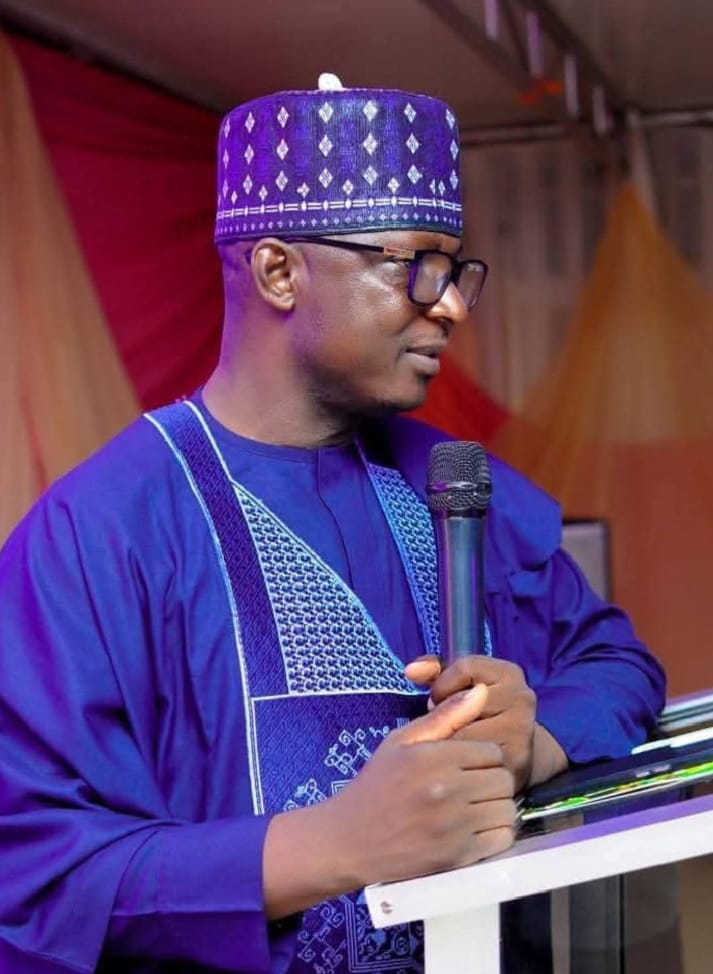
Global Port Leaders Endorse Nigeria’s Abubakar Dantsoho As Vice-President IAPH

Global Port Leaders Endorse Nigeria’s Abubakar Dantsoho As Vice-President IAPH

At the ongoing World Ports Conference in Kobe-Japan, Port professionals drawn from 64 Countries have endorsed the election of the Managing Director Nigerian Ports Authority (NPA) Dr. Abubakar Dantsoho as Vice-President of the International Association for Ports & Harbours (IAPH).

Coming on the heels of the administration of President Bola Ahmed Tinubu’s approval of the National Policy on Marine & Blue Economy,
Dantsoho’s election as Vice-President of the IAPH is a testament of Nigeria’s growing influence in the comity of Maritime nations.

IAPH is a non-governmental organization (NGO) headquartered in Tokyo, Japan. In November 1955, some 100 world port leaders gathered in Los Angeles to announce the creation of IAPH. Over the past six decades, IAPH has developed into a global alliance of ports, representing today some 190 ports and 167 port-related businesses in 89 countries as of 6 December 2024. The member ports together handle well over 60% of the world’s sea-borne trade and over 60% of the world container traffic.
IAPH aims to be the global trade association of choice for port authorities and operators, representing their interests at regulatory level at the International Maritime Organization, the World Customs Organization, the International Standards Organization and other global alliances such as the Global Maritime Forum and the World Economic Forum.
 
IAPH has consultative status and works on behalf of ports with additional United Nations bodies such as the UNCTAD (UN Conference on Trade and Development), UNEP (UN Environment Program) and the UN Global Compact.

Free Nnamdi Kanu Protest: Group Warns IPOB, Sowore Against Attack on Government Buildings

Free Nnamdi Kanu Protest: Group Warns IPOB, Sowore Against Attack on Government Buildings

… Insist Hoodlums Could Hijack it, Unleash Terror on Citizens

The Progressives Unity and Development Forum (PUDF) has cautioned the Indigenous People of Biafra (IPOB) and rights activist, Omoyele Sowore against the planned nationwide protest aimed at pressuring the Federal Government to release the detained IPOB leader, Mazi Nnamdi Kanu.

Sowore had earlier reaffirmed that the planned #FreeNnamdiKanuNow march to the Aso Rock Villa would hold on October 20, describing the date as “sacrosanct.”

In a statement shared on his official social media page, Sowore said preparations were ongoing for what he called a “peaceful march” to demand Kanu’s immediate release.

However, the PUDF, in a statement signed by its National Coordinator, Mr. Abraham Nwanchukwu, and made available to journalists today, the group expressed concern that the protest could be hijacked by hoodlums and political opportunists who might use the event to unleash violence and attack government buildings.

“Sowore should be told now, before the D-day, that similar protests in the past spiraled out of control, with hoodlums taking advantage to loot and destroy public and private properties,” the statement read in part.

The group cited previous incidents in Kano, Kaduna, and Lagos, where peaceful demonstrations turned violent and resulted in the destruction of public infrastructure.

“Against this background, we are calling on IPOB, Sowore, and other supporters of the planned protest to shelve the action and adopt more civic and responsible means of engagement,” the statement added.

“Nobody has a monopoly of violence, and we are issuing this warning to prevent any action that could provoke counter-reactions or endanger national peace.”

The group urged security agencies to remain vigilant and appealed to Nigerians to avoid being used by those “seeking to destabilize the country under the guise of activism.”

A Note of Disappointment and Concern on the Presidential Pardon- RMNN

A Note of Disappointment and Concern on the Presidential Pardon

For Immediate Release

Date: October 12, 2025

Issued by: Rescue Movement for New Nigeria (RMNN)

The Rescue Movement for New Nigeria expresses deep disappointment and grave concern over the recent decision by President Bola Ahmed Tinubu to grant presidential pardon to individuals convicted of serious crimes—including drug trafficking, terrorism, murder, and acts of betrayal against the Nigerian state.

While this action may have been presented as an act of mercy or reconciliation, it poses a serious threat to national security, public trust, and the moral integrity of our nation.

Releasing individuals who have demonstrated blatant disregard for human life and the rule of law risks undoing years of progress toward peace, justice, and accountability. It sends a dangerous signal that grave offenses can be easily forgiven without due consideration for victims, national safety, or justice.

This decision not only emboldens criminal networks but also demoralizes security personnel who continue to risk their lives daily in defense of the nation. Moreover, it dishonors the memory and suffering of innocent Nigerians who have fallen victim to the very crimes for which these offenders were convicted.

Mercy must never come at the expense of justice or public safety. Leadership demands compassion balanced with accountability—to protect the innocent, uphold the law, and preserve the nation’s moral foundation.

Although the Constitution empowers the President to exercise the prerogative of mercy, such discretion must be guided by fairness, transparency, and national interest. Granting clemency to those whose actions have endangered lives and undermined public trust raises profound concerns about governance and justice.

We therefore call on the Federal Government to review the criteria and transparency of the clemency process, ensuring that future decisions are aligned with justice, national security, and the collective will of the Nigerian people.

Forgiveness and reconciliation are noble virtues, but they must never come at the cost of justice and accountability. The strength of any democracy rests on its commitment to the rule of law and the sanctity of human life.

Issued in the interest of national peace, justice, and good governance in the Federal Republic of Nigeria.

The Nation Deserves Better.

SIGNED:

His Excellency, Faduri Oluwadare Joseph (Fadojoe), Leader, Rescue Movement For New Nigeria aka ,Rescue The Vulnerable Initiative and former Labour Party Presidential Aspirant

Call for Removal of Kaduna State Pension Bureau Executive Secretary.

Call for Removal of Kaduna State Pension Bureau Executive Secretary.

To His Excellency, the Governor of Kaduna State,

We, the undersigned pensioners and concerned citizens of Kaduna State, hereby call for the immediate removal of the Executive Secretary of the Kaduna State Pension Bureau. The reasons for this demand are:

  1. Incompetence: Failure to efficiently manage pension payments, leading to significant delays and hardship.
  2. Maladministration: Lack of transparency and accountability in handling pension funds and benefits.
  3. Nepotism: Allegations of favoritism and discriminatory practices in the payment process.
  4. Refusal to pay gratuities and death benefits: Despite repeated promises, pensioners have not received their entitlements.

These actions have caused immense suffering and hardship to pensioners and their families. We urge you to take immediate action to:

  1. Remove the Executive Secretary of the Kaduna State Pension Bureau.
  2. Conduct a thorough investigation into the affairs of the Pension Bureau.
  3. Ensure prompt payment of all outstanding gratuities and death benefits.

We believe this action will restore trust and confidence in the Pension Bureau and ensure the welfare of pensioners is prioritized.

Signed,

Kaduna State and Local Government Pensioners

cc: Kaduna State House of Assembly, Pensioners’ Welfare Groups, and relevant stakeholders.

OPEN LETTER TO HIS EXCELLENCY, PRESIDENT BOLA AHMED TINUBU.

OPEN LETTER TO HIS EXCELLENCY, PRESIDENT BOLA AHMED TINUBU.

I, Comrade Musa Mohammed (Moonlight), concerned individual, write to express my thoughts on the recent presidential pardon granted to 175 convicts and former convicts. While i welcome the gesture of mercy and recognize the constitutional powers vested in you, i compelled to voice my concern regarding the exclusion of suspended Deputy Commissioner of Police, Abba Kyari, from the list of beneficiaries.

DCP Abba Kyari, a decorated officer with a proven track record in combating crime and terrorism, has been a symbol of hope in the fight against insecurity.

His contributions to national security cannot be overstated. Despite his current legal challenges, many Nigerians believe that his expertise would be invaluable in the ongoing efforts to restore peace and stability in our nation.

The International Human Rights Commission (IHRC) and several other organizations have appealed to you to consider granting a presidential pardon to DCP Kyari, citing national security interests and the need for experienced personnel in the fight against crime.

These appeals are rooted in the understanding that conditional clemency can serve as a pragmatic tool for peacebuilding and national reconciliation.

I urge you to consider the broader implications of excluding DCP Kyari from the pardon list.

His reintegration into national service, under strict conditions and accountability, could potentially bolster our security architecture and demonstrate a commitment to leveraging all available resources in the fight against insecurity.

I trust in your wisdom and leadership to make decisions that will benefit the nation.

I hope that you will give due consideration to the appeals made on behalf of DCP Abba Kyari and take the necessary steps to ensure that justice, mercy, and national interest are balanced.

Sincerely,

Comrade Musa Mohammed (Moonlight)
Kaduna Based Journalist, Activist and public Analyst.
moonlightnews15@gmail.com
08038895334

cc: Attorney General of the Federation and Minister of Justice,

National Assembly, Senate and House of Representatives,

Nigerian Police Force.

Baptist Seminary Kaduna Urges Moral Renewal, Justice, and Civic Responsibility at 65th Ministers’ Conference

Baptist Seminary Kaduna Urges Moral Renewal, Justice, and Civic Responsibility at 65th Ministers’ Conference


The Baptist Theological Seminary, Kaduna, has reaffirmed the authority of the Holy Scriptures as the foundation for faith, morality, and national renewal, calling on the Church in Northern Nigeria to lead by example in promoting honesty, compassion, and civic responsibility.

This resolution was contained in a communiqué issued at the end of the 65th Annual Ministers’ Conference of the Seminary, held from October 6 to 10, 2025, under the theme: “The Authority of Scripture and the Mission of the Church in Troubled Times.”

The communiqué was signed by:
Rev. Joseph John Hayab, Chairman, Board of Governors, Baptist Theological Seminary, Kaduna, and
Rev. Dr. Mannaseh Panpe, Acting President of the Seminary.

The weeklong conference brought together pastors, theological scholars, and church leaders from across the 19 Northern States and the Federal Capital Territory (FCT), representing more than 4,000 pastors, 5,000 local churches, and an estimated four million Baptist members.

According to the communiqué, delegates reaffirmed the absolute authority of the Bible as the inspired Word of God and the final guide for faith, morality, and conduct. They emphasized that obedience to God’s Word remains the only path to spiritual renewal, moral reformation, and lasting peace in Nigeria.

The Conference further resolved that the Church must not only preach salvation but also model honesty, humility, and compassion in leadership. It charged pastors to confront corruption and social decay through integrity and service, urging congregations to live out biblical values in all aspects of life.

On social conduct, the delegates cautioned against extravagant wedding and burial ceremonies, describing them as unbiblical and financially burdensome. The communiqué stressed that scriptural principles supersede cultural pressures, urging Christians to uphold moderation and contentment.

The ministers also condemned the silence of some church leaders in the face of moral decline and injustice, warning that such silence weakens the Church’s moral authority. They called on pastors to speak truth to power with wisdom and courage, maintaining the Church’s role as “the conscience of the nation and the voice of the voiceless.”

The Board of Governors of the Seminary reaffirmed its commitment to strengthening theological education and leadership development. Delegates commended ongoing institutional reforms, expressed gratitude to the Seminary’s management for hosting a spiritually enriching event, and announced plans to appoint a substantive President soon. The Seminary’s partnership with Bethel High School was lauded as a model for Christian educational collaboration.

Expressing concern over Christian apathy toward elections, the Conference urged pastors to mobilize members to obtain their Permanent Voter Cards (PVCs) ahead of the 2027 general elections, describing political participation as a civic and moral responsibility for promoting righteousness in governance.

Delegates acknowledged the efforts of President Bola Ahmed Tinubu and Governor Uba Sani of Kaduna State in improving national unity and security coordination. While noting progress, they urged all levels of government to sustain reforms, strengthen local peacebuilding initiatives, and prioritize justice and welfare for victims of violence.

On international relations, the Conference reacted to moves by the United States Senate to designate Nigeria as a Country of Particular Concern (CPC) over alleged violations of religious freedom. While admitting that Christians face persecution and discrimination, the delegates appealed to foreign governments not to impose the CPC designation, arguing that it could exacerbate violence and hinder Nigeria’s access to essential security support.

Instead, the Conference urged foreign partners to pursue constructive collaboration to help Nigeria address insecurity and promote genuine religious freedom.

Delegates also lamented the persistent economic hardship faced by Nigerians, attributing it to banditry, insurgency, and unemployment that have crippled livelihoods and community life. They called on the government to govern with the fear of God, adopt people-centered economic policies, and prioritize human welfare above political interests.

OVERSIGHT OR OVERREACH: HOW FEDERAL AGENCIES UNDERMINE KANO STATE GOVERNMENT

OVERSIGHT OR OVERREACH: HOW FEDERAL AGENCIES UNDERMINE KANO STATE GOVERNMENT

“In principle, the role of EFCC, ICPC and other security agencies is to serve the Nigerian people by ensuring that no public officer abuses office or mismanages resources. However in Kano State – they have fully become political weapons.”

By Aminu Hussaini Sagagi

In recent years, Nigerians have witnessed a troubling trend in the nation’s democratic practice – in the increasing use of federal oversight agencies as political tools. Nowhere is this dynamic more glaring than in Kano State where the federal government’s top officials appear to have systematically deployed regulatory and security institutions to weaken the state government and tilt the balance of power for partisan advantage.

Whereas, in theory, government oversight is the lifeblood of accountability. In practice – at least in Kano State – it has fully become a political weapon. Across a series of investigations, lawsuits and injunctions, federal institutions have been accused of using their powers not to promote good governance, but to undermine it.

“There is increasing use of federal oversight agencies as political tools. Whereas, in theory, government oversight is the lifeblood of accountability. In practice – at least in Kano State – it has fully become a political weapon”

Investigations, eyewitness accounts and review of events reveal disturbing patterns with agencies such as the Independent Corrupt Practices Commission (ICPC), Economic and Financial Crimes Commission (EFCC) and federal security bodies constitutionally mandated to uphold accountability and the rule of law. In principle, their role is to serve the Nigerian people by ensuring that no public officer abuses office or mismanages resources.

However, in Kano State, these agencies often seem to operate with selective vigour. Investigations, arrests and public pronouncements tend to target state government officials or its allies, while federal appointees and political actors’ aligned with the ruling All Progressives Congress (APC) largely appear untouched. This pattern not only undermines public trust but also suggests a strategic effort to destabilize the current Kano’s political leadership.
Why Kano? The Political Stakes and Political Calculations behind Oversight Overreach
Kano is a political prize in Nigeria. With its vast population, it plays a decisive role in national elections. Weakening the state government or creating the perception of dysfunction serves a clear political purpose and electoral logic: it reduces the ability of local leaders to mobilize support, while strengthening the hand of federal-aligned opposition figures.

By leveraging oversight bodies, federal authorities gain the dual advantage of projecting themselves as anti-corruption champions while quietly eroding the political base of their rivals. This is not accountability; it is a calculated suppression.

The Democratic Cost of Targeting State Government Officials in Seemingly Selective and Politically Motivated Anti-Corruption Crackdowns
The instrumentalization of federal oversight agencies for political gain carries dire consequences. First, it delegitimizes the agencies themselves, turning them from impartial guardians of accountability into partisan weapons. Second, it erodes federalism, denying states the space to govern effectively without constant interference. Third, it risks alienating citizens, who see law enforcement not as a shield for justice but as a sword of politics.
Ultimately, this cycle deepens mistrust between federal and state institutions, widens political divisions and undermines the spirit of Nigeria’s democracy.

A Path Forward
For Nigeria to strengthen its democracy, oversight bodies must be insulated from political manipulations. Appointments should be transparent, tenure secure and operations subject to bipartisan legislative scrutiny. Equally, civil society and the media must continue to expose selective enforcement and call for reforms that restore the credibility of these institutions.

Kano State’s experience is a cautionary tale and also an opportunity. By confronting the misuse of federal power, Kanawas and Nigerians can insist on a democracy where oversight agencies serve citizens, not partisan interests.

This personal opinion is contributed by Aminu Hussaini Sagagi, the Special Adviser to the Governor of Kano State on Justice/Constitutional Matters

SOKAPU Youth Wing Urges Kaduna Govt to Introduce Scholarship Scheme as High Fees Threaten Access at Federal University of Applied Sciences, Kachia

SOKAPU Youth Wing Urges Kaduna Govt to Introduce Scholarship Scheme as High Fees Threaten Access at Federal University of Applied Sciences, Kachia

The Southern Kaduna Peoples Union (SOKAPU) Youth Wing has called on Governor Uba Sani to urgently introduce a comprehensive scholarship scheme for indigenes seeking admission into the Federal University of Applied Sciences, Kachia (FUASK), citing high tuition fees that could deny many access to tertiary education.

In a statement signed by the National Youth Wing Coordinator, Comrade Solomon Simon, the group lamented that the institution’s tuition and associated fees, which range between ₦160,000 and ₦250,000 per session—excluding acceptance and accommodation charges—are far beyond the reach of the average Kaduna family.

The statement stressed that FUASK’s specialized programs are vital for developing critical human capital in applied sciences and technology. Denying qualified and motivated youths the opportunity to study due to financial constraints, it noted, would amount to a setback for the state and the nation.

“Education remains the most powerful tool for empowerment and poverty alleviation. We urge Governor Uba Sani to act decisively to ensure that no qualified indigene of Kaduna State is denied the opportunity to study at FUASK simply because their family is poor,” the statement read.

The youth group recalled the fee hikes under the administration of former Governor Nasir El-Rufai, which saw tuition in state-owned institutions like Kaduna State University (KASU) rise from below ₦30,000 to over ₦150,000 for indigenes—an increase that had a devastating impact on many families.

While commending Governor Uba Sani for his efforts to review and reduce fees in state-owned institutions, fulfilling a key campaign promise, SOKAPU urged further action to support students enrolling in specialized federal institutions.

The group recommended that the state government:

Establish a Targeted Scholarship Scheme: Create a dedicated scholarship or bursary program for Kaduna indigenes admitted into FUASK to cover a significant portion of tuition fees.

Review Financial Aid Structure: Strengthen and expand the Kaduna State Scholarship and Loans Board’s programs to better reflect current economic realities and rising education costs.

Beyond educational concerns, the SOKAPU Youth Wing also addressed the growing political tension in Southern Kaduna, urging political actors to prioritize regional unity over partisan divisions.

The group reaffirmed that SOKAPU remains apolitical under the leadership of Comrade Samuel Tabara, noting that its primary mission is the development and welfare of Southern Kaduna people, regardless of political affiliation.

“SOKAPU will never compromise its core values or the defense of our people’s collective interest. We urge politicians to sheathe their swords and put the region’s progress above personal or party considerations,” the statement added.

The group further cautioned against inflammatory exchanges over alleged defections and political alignments, emphasizing that unity and collective development should remain the focus.

“Political parties are merely vehicles for accessing power; what matters most is how that power is used to better the lives of our people,” SOKAPU maintained.

Uba Sani Releases ₦2.3bn for Retirees and Families of Deceased Workers

Uba Sani Releases ₦2.3bn for Retirees and Families of Deceased Workers

Kaduna State Governor, Senator Uba Sani, CON, has approved the release of ₦2.321 billion for the settlement of pension entitlements, gratuities and death benefits to retirees and families of deceased civil servants across the state.

The disbursement covers Accrued Rights under the Contributory Pension Scheme (CPS) and Gratuity/Death Benefits under the old Defined Benefit Scheme (DBS). With this payment, Kaduna State has now paid out ₦6.678bn in 2025 and a total of ₦13.5bn in the last two years of the present administration.

Kaduna State Commissioner of Information, Malam Ahmed Maiyaki, said the welfare of pensioners remains a top priority of the government, stressing that regular and timely payments will continue to ease the hard ship of senior citizens.

According to the Executive Secretary, Ibrahim Balarabe – Kaduna State Pension Bureau, the latest batch will benefit 661 retirees and families across State and Local Governments — with ₦1.736bn for Accrued Rights of 511 retirees under the CPS, and ₦585m for Gratuities and Death Benefits to 315 pensioners and next-of-kin under the DBS.

The Bureau further explained that for those under the Contributory Pension Scheme, their Accrued Rights will be credited directly into their Retirement Savings Accounts (RSAs) with their respective Pension Fund Administrators, while pensioners under the Defined Benefit Scheme will soon be invited for screening and verification before payment.

Governor Uba Sani has consistently maintained that ensuring dignity for retirees is not just a statutory obligation, but a moral responsibility of government.

This approval, the statement concluded, further underscores the administration’s commitment to safeguarding the livelihoods of pensioners, upholding their rights, and strengthening the trust of the Kaduna workforce.

THE THIN BLUE LINE CROSSED: THE URGENT NEED TO TAME POLICE EXCESSES IN KANO STATE

THE THIN BLUE LINE CROSSED: THE URGENT NEED TO TAME POLICE EXCESSES IN KANO STATE

By Aminu Hussaini Sagagi

The events unfolding in Kano State have once again placed Nigeria’s democratic institutions under scrutiny. The Nigeria Police Force (NPF), established as an instrument of law and order, now stands accused of overstepping its constitutional boundaries and undermining the legitimate authority of the Kano State Government. 

The growing pattern of disregard for due process and elected leadership which was climaxed by the 1st October Independence Day Parade embarrassing snub and insubordination to the State authority by the Police calls for urgent national reflection and correction.Kano, Nigeria’s most populous State, has long been a political and cultural bellwether. Its governance is central not only to the aspirations of its citizens but also to the stability of the wider federation. Yet, recent episodes reveal an unsettling tension: the police, rather than acting as a neutral enforcer of law, is being perceived as meddling in State affairs – sometimes in ways that reasonably appear to subvert the legitimate powers of the elected Governor and his administration.

The Nigerian Constitution clearly stipulates that the police is to operate under federal command while maintaining respect for state institutions. The delicate balance is meant to ensure both national cohesion and local autonomy. When this balance is distorted, as is increasingly evident in Kano, the consequences are grave. It erodes public trust, emboldens lawlessness and projects the image of a democracy struggling to uphold its own rules.At the heart of this crises is not merely a tussle over law enforcement, it is a test for Nigeria’s democratic maturity.

 A police force that prioritizes political instructions over constitutional obligations risks becoming an agent of instability rather than a guardian of peace. For Kano, the repercussions are already palpable: heightened political tension, distrust in public institutions and the growing perception of a State under siege by the very body sworn to protect it.This is not a challenge for Kano alone; it is a national issue. If unchecked, it sets a precedent where the will of the people, expressed through their elected leaders, can be undermined by security forces. Such a trajectory endangers Nigeria’s fragile democracy and threatens the principle of federalism that holds the nation together.

The way forward is clear and simple. First, the Federal Government must reign in the excesses of the Nigerian police and reaffirm their mandate as impartial enforcer of the law, not a political actor. Second, the National Assembly should assert its oversight role to prevent further erosion of democratic norms. 

Third, civil society and the media must remain vigilant, ensuring that arbitrary use of force does not become normalized.Kano deserves peace, respect for its elected leadership and adherence to constitutional order. Nigeria deserves no less!The time has come to remind the police that their power is neither above the State, nor beyond the constitution. 

Their legitimacy depends not on force, but on fidelity to the rule of law. It is wisely said “When the pot boils over, it burns the cook”This personal opinion piece is contributed by Aminu Hussaini Sagagi, a seasoned lawyer and Special Adviser to the Governor of Kano State, AKY on Justice/Constitutional Matters.

Create your own website, free on WordPress.com.Create your own website.
Start free