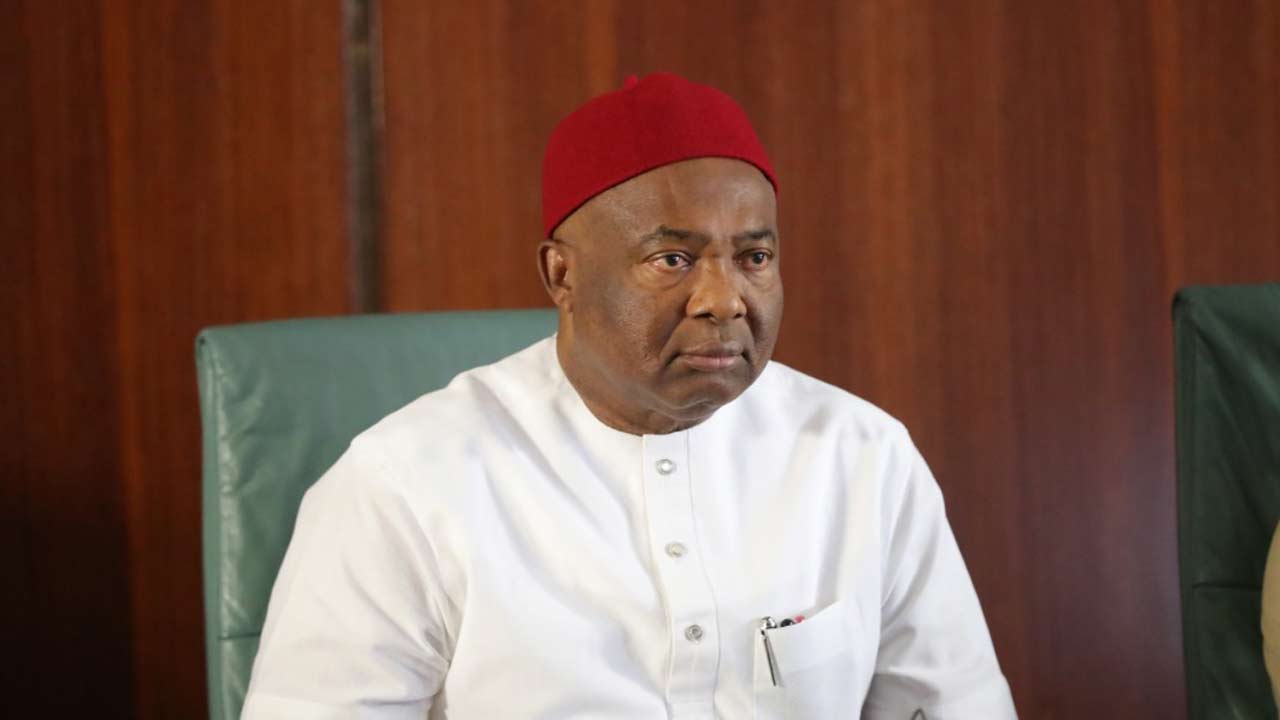
Delta North Senate Race 2027: Neither Okowa Nor Ochei — The Case for a Fresh Start‎The Illusion of Choice Between Two Old Orders‎

‎Delta North Senate Race 2027: Neither Okowa Nor Ochei — The Case for a Fresh Start
‎The Illusion of Choice Between Two Old Orders
‎
‎The Delta North senatorial race is shaping up as what many are calling a “false binary” — a manufactured contest between two political heavyweights who, despite their publicly presented rivalry, are products of the same system that has failed the ordinary people of Delta North for decades. Senator Ifeanyi Okowa and Rt. Hon. Victor Ochei are not opposites. They are two sides of the same worn coin, and the people of Delta North deserve to see through this.
‎
‎The argument here is not merely political preference — it is rooted in history, electoral evidence, and political logic.
‎
‎Ochei Is Not the Lion to Slay Okowa’s Hegemony — He Is Part of It
‎
‎Victor Ochei served as Speaker of the Delta State House of Assembly for years. He was a product and beneficiary of the same Delta PDP machine that produced Okowa. His entry into the NDC senate race framed as a “rescue mission” against Okowa’s dominance is, to put it plainly, political theatre. You cannot credibly present yourself as the antidote to a system you helped build and from which you benefited for over a decade.
‎
‎The Delta State PDP itself, in a formal statement, described Ochei as someone who had enjoyed the privilege of serving as a former Speaker of the Delta State House of Assembly — hardly the profile of an outsider challenging an entrenched order.
‎
‎Voters in Delta North who are wiser now — and the 2023 elections proved they are — understand this distinction.
‎
‎The Historical Record: Okowa Has Beaten Ochei Before, and Can Do It Again
‎
‎One of the most compelling facts in this race is the documented electoral history between these two men. It is not speculation — it is established record.
‎
‎In the 2014 PDP Delta State governorship primary, Okowa garnered 406 votes to beat Ochei to a distand 3rd position, who polled only 185 votes — a comprehensive defeat. That primary also featured David Edevbie (299 votes), backed by then-Governor Uduaghan, and Okowa still dominated.
‎
‎After that humiliation, Ochei’s political journey became a study in repeated failure. In what appeared like his desperate search for power, he left the PDP and pitched tent with the Accord Party, where he failed again to win the Delta North Senatorial District seat.
‎
‎He was defeated by the late Senator Peter Nwaoboshi, winning only his local government area while losing the remaining eight by substantial margins.
‎
‎That is the Ochei electoral record in plain terms: he has not won any significant election since 2014. Okowa knows this history intimately. He has beaten Ochei before in a head-to-head contest, and Okowa’s political machinery — however imperfect — is built for exactly this kind of battle.
‎
‎The 2023 Lesson: Peter Obi Showed Ochei Cannot Deliver Delta North Against Okowa
‎
‎The 2023 presidential election provided a powerful natural experiment. Labour Party and ordinary, unorganized voters in Delta North mobilized massively for Peter Obi — defying both Okowa’s PDP and Ochei’s camp. This was a grassroots revolt that had nothing to do with Ochei’s political structures.
‎
‎The lesson is critical: when the people of Delta North choose to vote differently, they do it on their own conscience and with their own energy — not because Ochei delivers them. Ochei did not engineer the Peter Obi wave. He was alongside it at best. To now argue that the NDC should give Ochei the ticket because he can “break Okowa’s dominance” is to misread what happened in 2023 entirely. The voters moved independently. They can do so again — but they will do it for a candidate they genuinely believe in.
‎
‎ 
‎
‎Ochei’s Entry Has Wounded the Prospect of a Genuine Fresh Start
‎
‎This is perhaps the most damaging dimension of Ochei’s entry into the NDC race. Before he arrived, there was a genuine and growing conversation about credible new voices — younger, cleaner, unburdened by the failures of the old PDP era. Names like Engr. Kingsley Okafor, Barr. Kanma, Hilary Nwaukor, Utomi Nwanne, Engr. Ebite Emmanuel, and others represent something that neither Okowa nor Ochei can offer: a break from the past.
‎
‎In 2014, Ochei was invited to a meeting where a highly respected leader encouraged him to contest for the Delta North Senatorial seat while supporting Okowa’s governorship aspiration — an offer he declined, choosing instead to fight for governor. This pattern reveals a man who has consistently prioritised personal ambition over the collective good of Delta North. His entry into the NDC race now follows the same logic.
‎
‎By inserting himself into the NDC race, Ochei has done two damaging things simultaneously:
‎
‎He has split the anti-Okowa vote that could have coalesced around a youthful, credible candidate.
‎
‎He has reframed the race as “Okowa vs. Ochei” — a familiar, tired narrative that Okowa’s political team knows exactly how to manage and win.
‎
‎A candidate like Engr. Kingsley Okafor, who  built the NDC structure in Delta State from the ground up, would have been positioned as something genuinely different — a contrast that might have resonated deeply with voters exhausted by recycled political figures. Ochei’s presence has muddied that contrast and compressed the political space for genuine alternatives.
‎
‎
‎What Delta North Actually Needs
‎
‎The people of Delta North do not need a senator who spent decades inside the system and is now rebranding as a reformer. They do not need to choose between the man who governed them for eight years and the man who served as Speaker during some of those same years. What they need is representation that:
‎
‎Was not shaped by the same prebendal politics that has stunted development in the district.
‎
‎Has the energy and idealism to pursue constituency accountability without old debts to repay.
‎
‎Can speak credibly to young people, who — as 2023 showed — can mobilize in large numbers when genuinely inspired.
‎
‎Ochei Is Yesterday’s Man — And Delta North’s Youth Know It
‎
‎Let us be direct about something that the political class often refuses to acknowledge: Victor Ochei does not represent new energy. He represents the recycling of old energy in new packaging. His political career was forged in the same smoke-filled rooms, the same transactional networks, and the same era that produced the very dysfunction Delta North is trying to escape. A change of party platform does not change the character of a politician. Ochei in the NDC is still Ochei of the old order — and the youths of Delta North are not fooled.
‎
‎This is not a generation that wants to be led by veterans of a failed system. The young people of Delta North — educated, connected, increasingly politically aware — want to represent themselves. They are not looking for a patron who claims to speak for them while being shaped by none of their realities. They want someone who approximates them: in age, in experience, in vision, in the struggles they have faced, and in the Nigeria they are trying to build. That is not Ochei. That is not Okowa. That is someone from a newer generation entirely.
‎
‎Why and who Approximates That Someone?
‎
‎If the argument so far has been about what Delta North must reject, this section is about what it can embrace. Let’s take it from NDC point of view starting with the man who was the only Delta North Senatorial District Aspirant under NDC from late February 2026 till May 6, 2026; others, including Ochei, joined NDC due to their expected ‘Obi wave”, not necessarily their own capacity to win election.
‎
‎Engr. Kingsley Okafor is not a political opportunist who arrived at the NDC when it became convenient. He is one of the foundational builders of the party’s structure in Delta State starting since February, 2026. When NDC was not fashionable, he mobilized and galvanized  the people of Delta North, as required by the Electoral Act 2026, for Ward congresses, L.G.A. Congresses, and culminating it by  serving as the Chairman of the Electoral Committee for the NDC Delta State Congress — the congress that followed the formal dissolution of the party’s caretaker committee and was conducted in accordance with due process, backed by a motion duly moved and seconded by registered party members. That is not the biography of a gate-crasher. That is the biography of a committed party man who did the unglamorous work of institution-building before any senate race was on the horizon.
‎
‎But Okafor’s credentials go well beyond party structure. He holds what few politicians in this race can claim: the keys to the doors that matter in Abuja. Federal legislative effectiveness is not achieved through noise — it is achieved through relationships, access, and credibility within the corridors of national power built over the years. Okafor brings those assets to the table without the burden of old political debts that would compromise his independence once elected.
‎
‎More profoundly, Okafor has spent over 14 years empowering the girl child and the less privileged through his Infinite Respite Foundation — not as a campaign prop, but as a sustained commitment that predates any political ambition. When a man builds a foundation and runs it for well over a decade before running for office, that tells you something about his character that no manifesto can manufacture.
‎
‎And for the youth — the demographic that will decide this race if properly mobilized — Okafor’s AfriSQuare Entertainment has, over the last five years, become a genuine hub for talent cultivation and development. This is not a politician who discovered youth empowerment when elections approached. This is a man whose ecosystem was already incubating young potential before a single campaign poster was printed. He is not speaking to the youth from across a podium. He is rooted in their world.
‎
‎The Question Ochei Must Answer — And Cannot
‎
‎There is a question that hangs over Victor Ochei’s entire campaign, and it deserves to be asked plainly: If he is truly a force capable of defeating the Okowa machinery, why did he not challenge Okowa directly in the APC primary?
‎
‎Ned Nwoko did. Whatever one thinks of Nwoko, he chose to confront Okowa’s political orbit head-on, within the ruling party’s framework, on a level playing field. Ochei chose a different path — not the path of maximum political courage, but the path of least institutional resistance. He moved to a new party where he could position himself as the biggest name in the room, crowding out younger, more organic voices who had actually invested in that party’s growth from the ground up.
‎
‎That is not the behaviour of a man driven by mission. That is the behaviour of a man driven by opportunity. And opportunism, as Delta North voters have repeatedly demonstrated, does not win elections — it just makes them messier.
‎
‎This race is not a top-down transaction where the biggest political name automatically inherits the vote. Every candidate will be evaluated on their own merits: their record, their roots, their relationships with the people, and the credibility of their vision. On all those counts, Ochei falls short — and Engr. Kingsley Okafor stands apart.
‎
‎Conclusion: The Window Is Still Open — But Not for Long
‎
‎The people of Delta North are not obligated to choose between Okowa’s established hegemony and Ochei’s recycled opposition. That is a false choice, and accepting it would be a surrender of political imagination at the very moment when something genuinely different is within reach.
‎
‎Ochei’s entry has complicated the field, yes. It has fragmented the alternative vote and handed Okowa a familiar battle he has fought — and won — before. But it has not closed the window entirely. The youth of Delta North, the grassroots energy that moved independently for Peter Obi in 2023, and the voters who are tired of yesterday’s men in tomorrow’s races — they still have a choice.
‎
‎That choice is Engr. Kingsley Okafor: rooted in the party, connected in Abuja, invested in the girl child, trusted by the youth, and unburdened by the compromises of the old order.
‎
‎Delta North deserves a senator who belongs to its future, not its past. The window is still open. The question is whether enough people will walk through it before it closes.
‎
‎In some subsequent publications on Delta North, other Candidates like Barr Ken Kanma, Hilary Nwaukor, Utommi Nwanne, Engr. Emmanuel Ebite, and others will be presented, though they all came into NDC race after Peter Obi had defected to NDC.
‎
‎

‎‘Stop Ethno-Religious Attacks on Atiku’: North East Christian Youths Slam Babachir Lawal

‎The Coalition of Christian Youth Leaders and Stakeholders in the North East has condemned what it described as ethno-religious attacks against former Vice President, Atiku Abubakar, urging political actors to embrace unity and inclusive leadership ahead of future elections.

‎

‎The coalition made its position known in a press statement issued on Friday in Gombe State and signed by its Chairman, Hon. Amb. Ibrahim Aliyu, JP.

‎

‎The group specifically criticized recent comments attributed to former Secretary to the Government of the Federation, Babachir David Lawal, describing them as divisive, inflammatory, and capable of deepening religious and ethnic tensions in the country.

‎

‎According to the coalition, it was disappointed that Babachir Lawal allegedly chose to direct criticism at Atiku Abubakar at a time when Nigeria is facing pressing security, economic, and social challenges.

‎

‎The group maintained that Atiku remains one of Nigeria’s most pan-Nigerian political figures, with support cutting across religious, ethnic, and regional lines.

‎

‎“While some politicians promote exclusion and identity-based politics, Atiku Abubakar continues to champion a Nigeria where competence, unity, and equal opportunity take precedence over religion, ethnicity, or tribal affiliation,” the statement said.

‎

‎The coalition warned against the use of ethno-religious sentiments in political discourse, stressing that such rhetoric threatens national cohesion and peaceful coexistence.

‎

‎It noted that Nigeria’s progress cannot be built on division, fear, or religious polarization, but on justice, equity, competence, and inclusiveness.

‎

‎The Christian leaders further highlighted what they described as Atiku’s longstanding commitment to religious tolerance and interfaith harmony, arguing that throughout his public and private life, he has demonstrated respect and support for people of different faiths.

‎

‎According to the coalition, leadership should be assessed based on the ability to unite citizens, protect their interests, and provide opportunities for all Nigerians regardless of religious or ethnic background.

‎

‎The group also rejected attempts to exploit religious sentiments for political advantage, insisting that such actions neither serve the interests of Christianity nor the broader Nigerian society.

‎

‎It called on Christian youths, women, religious leaders, civil society organizations, and other Nigerians to remain vigilant against divisive narratives and work collectively toward a political system founded on fairness, inclusiveness, and equal representation.

‎

‎The coalition further urged Nigerians to reject any political arrangement or culture that promotes exclusion, emphasizing that democracy can only thrive when every citizen feels represented, respected, and valued.

‎

‎Reaffirming its commitment to peace, justice, religious harmony, and good governance, the coalition pledged to continue advocating for a Nigeria where competence, character, and national interest take precedence over sectarian considerations.

ECN Launch Landmark Clean Hydrogen Programme,Targets Net-Zero Future and Industrial Revolution

ECN Launch Landmark Clean Hydrogen Programme,

Targets Net-Zero Future and Industrial Revolution

Nigeria, has formally launched its clean hydrogen development initiative under the Global Clean Hydrogen Programme, marking a significant step in the country’s drive toward energy transition, industrial decarbonisation and a net-zero emissions future.

The inaugural meeting of the Project Steering Committee (PSC) and inception workshop for the Nigeria Child Project of the Global Clean Hydrogen Programme which was held in Abuja, brought together government officials, development partners, industry stakeholders and energy experts to commence implementation of the ambitious initiative.

Director-General and Chief Executive Officer of the Energy Commission of Nigeria (ECN), Dr. Mustapha Abdullahi, while speaking at the event, described the project as a historic milestone that officially operationalises Nigeria’s clean hydrogen roadmap and signals a new era in the nation’s quest for energy security, industrial modernisation and environmental sustainability.

Dr. Abdullahi noted that the initiative aligns with Nigeria’s Energy Transition Plan, National Energy Policy, National Energy Master Plan and Renewable Energy Master Plan, all of which recognize hydrogen as a critical component of the country’s future energy mix.

According to him, hydrogen is projected to become increasingly important in Nigeria’s renewable energy portfolio from 2040, contributing substantially to electricity generation growth and supporting the country’s commitment to achieve net-zero carbon emissions by 2060.

He said the deployment of green hydrogen would not only help reduce carbon emissions but also transform key sectors of the economy, including manufacturing, steel production and chemical industries, which are among the country’s most energy-intensive sectors.

According to him, “The global energy landscape is undergoing a rapid transformation and Nigeria cannot afford to remain a passive observer,”

Dr Abdullahi added that the project aligns with President Bola Tinubu’s Renewed Hope Agenda by promoting energy diversification, reducing dependence on fossil fuels, creating skilled jobs and accelerating sustainable industrialization.

The ECN boss also expressed appreciation to the Global Environment Facility (GEF) and the United Nations Industrial Development Organization (UNIDO) for providing financial and technical support for the project, while assuring stakeholders of transparency and effective implementation.

Also speaking at the event, UNIDO Country Representative, Ambassador Philbert Johnson, said the Nigeria Child Project forms part of a broader Global Clean Hydrogen Programme being implemented across nine developing countries, including Nigeria, Algeria, Egypt, Namibia, South Africa, Pakistan, Malaysia, Ecuador and the Philippines.

Amb. Johnson explained that the five-year project, running from June 2026 to December 2029, is designed to strengthen Nigeria’s institutional capacity, establish enabling policy frameworks and enhance technological readiness for the adoption of green hydrogen technologies.

He said the programme targets hard-to-abate sectors such as heavy industry and transportation, which collectively account for about 20 per cent of global carbon dioxide emissions.

According to him, the project will focus on five key areas: policy development, technical readiness, green hydrogen industrial clusters and pilot projects, knowledge management and sharing, as well as monitoring and evaluation.

Amb. Johnson stated that expected outcomes include the development of a robust national policy and regulatory framework for green hydrogen, the creation of a national roadmap, identification of priority sectors for early adoption, support for industrial clusters and pilot demonstrations, and the establishment of a national knowledge-sharing platform.

He further disclosed that the initiative is expected to directly benefit about 1,250 Nigerians, with special emphasis on women and young people, while supporting the country’s industrial development objectives and climate commitments.

The UNIDO representative noted that the project falls under the Sustainable Energy Development and Environmental Management pillar of the Programme for Country Partnership (PCP) signed between UNIDO and the Federal Government of Nigeria in 2025.

He reaffirmed UNIDO’s commitment to supporting Nigeria’s transition to clean energy and building the institutional and technological foundations necessary for scaling up green hydrogen adoption.

Analysts say the launch of the programme places Nigeria among a select group of developing nations positioning themselves to leverage green hydrogen as a strategic tool for economic growth, industrial competitiveness and climate resilience.

With international backing, growing policy support and increasing global demand for clean energy solutions, stakeholders believe the initiative could unlock new investment opportunities, create jobs and establish Nigeria as a future hub for green hydrogen development in Africa.

Arewa Group Commends Governor Hope Uzodimma for Protecting Northerners in Imo

Arewa Group Commends Governor Hope Uzodimma for Protecting Northerners in Imo

An Arewa socio-cultural group has praised the Governor of Imo State, Hope Uzodimma, for what it described as his commitment to the protection of Northerners residing in the state.

The group, under the aegis of the Arewa Unity and Development Forum, said Governor Uzodimma’s administration has continued to demonstrate inclusiveness and tolerance by ensuring that residents, regardless of their ethnic or religious backgrounds, enjoy equal rights and protection under the law.

In a press statement signed by Comrade Musa Bawa Mohammed, the group’s spokesperson noted that the governor had consistently promoted peaceful coexistence among the diverse ethnic groups living in Imo State, creating an atmosphere conducive for business and social interaction.

According to the group, thousands of Northerners living and conducting legitimate businesses in the state have benefited from the government’s efforts to maintain security and foster unity among residents.

“We commend Governor Hope Uzodimma for his leadership and commitment to the safety of all Nigerians living in Imo State. His administration has shown that every citizen, irrespective of tribe or religion, deserves protection and equal opportunities,” the spokesperson said.

The forum further stated that the governor’s approach to governance has helped strengthen national integration and reduce ethnic tensions, particularly at a time when the country faces various security and socio-political challenges.

The group urged other state governors across the federation to emulate Uzodimma’s example by implementing policies that promote inclusiveness, tolerance, and peaceful coexistence among different ethnic groups.

It also reaffirmed its commitment to supporting initiatives aimed at fostering national unity and encouraging harmonious relationships among Nigerians regardless of their place of origin.

The Arewa group expressed optimism that continued collaboration between government authorities and community leaders would further enhance peace, security, and economic development in Imo State and across the country.

YARI’S SUSPECTED AGENDA TO UNDERMINE APC SUCCESS IN ZAMFARA

The recent launch of the Atiku Abubakar political platform in Zamfara State by Senator Abdulaziz Yari is a brazen act of anti-party activity designed to sabotage the re-election bid of Governor Dauda Lawal and President Bola Ahmed Tinubu, GCFR.

Credible reports confirm that Yari’s inner caucus and loyalists were fully kitted in Atiku-branded materials during the symbolic unveiling, leaving no doubt about his alignment with the opposition.

This comes against a troubling backdrop:

  1. Financial Questions: It is public knowledge that Senator Yari’s bank accounts were recently frozen by relevant authorities over unresolved financial issues.This raises serious questions he is yet to answer.
  2. Disregard for Party Unity: Yari deliberately boycotted all stakeholders’ meetings of Zamfara political leaders before and after the APC primaries, showing contempt for collective decision-making.
  3. Rejection of State Leadership: By his actions, Yari has insultingly refused to recognize Governor Dauda Lawal as the political leader of Zamfara State, thereby abdicating his responsibility to the APC structure he claims to belong to.

It is therefore inconceivable that a so-called APC leader would undermine the party’s chances ahead of crucial elections. Yet, history is repeating itself this is the same pattern of betrayal that cost APC all political offices in Zamfara in the past.

Further, there are widespread rumors that Senator Yari is bankrolling elements in opposition parties to weaken both Governor Dauda Lawal and President Tinubu’s electoral prospects.

Recall that a few months ago, Yari held a private meeting with Atiku Abubakar at the latter’s residence. No details of that meeting were disclosed. With the launch of this Atiku platform in Zamfara, it is now clear: Yari is working behind the scenes to engineer APC’s failure in Zamfara State.

We call on the APC National Working Committee to investigate these anti-party activities and act decisively. Zamfara APC cannot afford another betrayal.

Mohammed Yusuf
NATIONAL COORDINATOR.

APC RESQUE AND REBUILD MOVEMENT.

YARI’S SUSPECTED AGENDA TO UNDERMINE APC SUCCESS IN ZAMFARA

The recent launch of the Atiku Abubakar political platform in Zamfara State by Senator Abdulaziz Yari is a brazen act of anti-party activity designed to sabotage the re-election bid of Governor Dauda Lawal and President Bola Ahmed Tinubu, GCFR.

Credible reports confirm that Yari’s inner caucus and loyalists were fully kitted in Atiku-branded materials during the symbolic unveiling, leaving no doubt about his alignment with the opposition.

This comes against a troubling backdrop:

  1. Financial Questions: It is public knowledge that Senator Yari’s bank accounts were recently frozen by relevant authorities over unresolved financial issues.This raises serious questions he is yet to answer.
  2. Disregard for Party Unity: Yari deliberately boycotted all stakeholders’ meetings of Zamfara political leaders before and after the APC primaries, showing contempt for collective decision-making.
  3. Rejection of State Leadership: By his actions, Yari has insultingly refused to recognize Governor Dauda Lawal as the political leader of Zamfara State, thereby abdicating his responsibility to the APC structure he claims to belong to.

It is therefore inconceivable that a so-called APC leader would undermine the party’s chances ahead of crucial elections. Yet, history is repeating itself this is the same pattern of betrayal that cost APC all political offices in Zamfara in the past.

Further, there are widespread rumors that Senator Yari is bankrolling elements in opposition parties to weaken both Governor Dauda Lawal and President Tinubu’s electoral prospects.

Recall that a few months ago, Yari held a private meeting with Atiku Abubakar at the latter’s residence. No details of that meeting were disclosed. With the launch of this Atiku platform in Zamfara, it is now clear: Yari is working behind the scenes to engineer APC’s failure in Zamfara State.

We call on the APC National Working Committee to investigate these anti-party activities and act decisively. Zamfara APC cannot afford another betrayal.

NATIONAL COORDINATOR.

APC RESQUE AND REBUILD MOVEMENT.

Senatorial Ticket Crisis Rocks ADC as Two Candidates Emerge for Kaduna Central

Crisis rocks the African Democratic Congress (ADC) in Kaduna as party has produced two separate senatorial candidates for the Kaduna Central Senatorial District, raising fresh concerns over deepening divisions within the opposition party ahead of the 2027 general elections.

Information gathered revealed that former lawmaker, Senator Musa Bello, emerged as the candidate of one faction of the party, while the incumbent lawmaker representing the district, Senator Lawal Adamu, was reportedly declared candidate by a rival faction.

The development has created uncertainty among party members and supporters across Kaduna State, with both camps insisting that their respective candidates emerged through legitimate processes conducted in accordance with the party’s constitution and guidelines.

Sources disclosed that parallel exercises were allegedly conducted by competing factions, resulting in the emergence of different candidates for the same senatorial seat. Each group has continued to lay claim to the authentic mandate, further fueling tensions within the party.

Some members interviewed described the situation as a major setback for the ADC, particularly in Kaduna Central, regarded as one of the most politically strategic senatorial districts in the state.The district comprises seven local government areas — Kaduna North, Kaduna South, Igabi, Chikun, Giwa, Kajuru and Birnin Gwari — making it a critical battleground in the state’s political landscape.

Party stakeholders have expressed fears that the unresolved dispute could significantly weaken the ADC’s prospects in Kaduna Central, where the party is expected to challenge established political forces, particularly the ruling All Progressives Congress and the opposition Peoples Democratic Party.

“The emergence of parallel candidates sends a negative signal to voters and may undermine the party’s growing support base in the state,” a party source who requested anonymity said.

The crisis comes amid increasing political realignments across Kaduna State, with several politicians reportedly exploring new alliances and platforms ahead of the next electoral cycle.

As of press time, officials of the party had yet to issue a comprehensive statement clarifying the status of the two claimants. However, sources within the ADC disclosed that consultations were ongoing among key stakeholders to prevent the disagreement from escalating into a prolonged legal and political battle.

Some party members argued that the emergence of multiple claimants to the same senatorial ticket reflects broader leadership and organisational challenges that have recently affected the ADC at the national level. The party has in recent years witnessed internal disagreements and legal tussles over its leadership structure, issues that critics say continue to affect its cohesion.

Meanwhile, political watchers across Kaduna State are closely monitoring developments, as the eventual resolution of the controversy is expected to have far-reaching implications for the Kaduna Central senatorial contest and the broader opposition strategy in the state ahead of the 2027 general elections.

Senatorial Ticket Crisis Rocks ADC as Two Candidates Emerge for Kaduna Central

Crisis rocks the African Democratic Congress (ADC) in Kaduna as party has produced two separate senatorial candidates for the Kaduna Central Senatorial District, raising fresh concerns over deepening divisions within the opposition party ahead of the 2027 general elections.

Information gathered revealed that former lawmaker, Senator Musa Bello, emerged as the candidate of one faction of the party, while the incumbent lawmaker representing the district, Senator Lawal Adamu, was reportedly declared candidate by a rival faction.

The development has created uncertainty among party members and supporters across Kaduna State, with both camps insisting that their respective candidates emerged through legitimate processes conducted in accordance with the party’s constitution and guidelines.

Sources disclosed that parallel exercises were allegedly conducted by competing factions, resulting in the emergence of different candidates for the same senatorial seat. Each group has continued to lay claim to the authentic mandate, further fueling tensions within the party.

Some members interviewed described the situation as a major setback for the ADC, particularly in Kaduna Central, regarded as one of the most politically strategic senatorial districts in the state.The district comprises seven local government areas — Kaduna North, Kaduna South, Igabi, Chikun, Giwa, Kajuru and Birnin Gwari — making it a critical battleground in the state’s political landscape.

Party stakeholders have expressed fears that the unresolved dispute could significantly weaken the ADC’s prospects in Kaduna Central, where the party is expected to challenge established political forces, particularly the ruling All Progressives Congress and the opposition Peoples Democratic Party.

“The emergence of parallel candidates sends a negative signal to voters and may undermine the party’s growing support base in the state,” a party source who requested anonymity said.

The crisis comes amid increasing political realignments across Kaduna State, with several politicians reportedly exploring new alliances and platforms ahead of the next electoral cycle.

As of press time, officials of the party had yet to issue a comprehensive statement clarifying the status of the two claimants. However, sources within the ADC disclosed that consultations were ongoing among key stakeholders to prevent the disagreement from escalating into a prolonged legal and political battle.

Some party members argued that the emergence of multiple claimants to the same senatorial ticket reflects broader leadership and organisational challenges that have recently affected the ADC at the national level. The party has in recent years witnessed internal disagreements and legal tussles over its leadership structure, issues that critics say continue to affect its cohesion.

Meanwhile, political watchers across Kaduna State are closely monitoring developments, as the eventual resolution of the controversy is expected to have far-reaching implications for the Kaduna Central senatorial contest and the broader opposition strategy in the state ahead of the 2027 general elections.

Igabi APC Warns Former Speaker Zailani Over Alleged Attacks on Party

Igabi APC Warns Former Speaker Zailani Over Alleged Attacks on Party

The All Progressives Congress (APC) in Igabi Local Government Area of Kaduna State has cautioned former Speaker of the Kaduna State House of Assembly, Rt. Hon. Yusuf Zailani, against what it described as persistent provocative remarks and attacks on the ruling party following his defeat in the recently concluded party primaries.

The party leadership expressed concern over Zailani’s recent public comments, alleging that the former lawmaker had embarked on a campaign capable of undermining the unity and image of the APC in Kaduna State.

Speaking in a chat with journalists, the Chairman of the APC in Igabi Local Government, Hon. Bashir Jibrin Jaji, said the party was disappointed by what he termed “unwarranted vituperations” from a senior party member who had benefitted immensely from the platform of the APC.

According to Jaji, Zailani’s conduct since the conclusion of the primaries has been unbecoming of a party loyalist and could create unnecessary tension within the ranks of the party if not checked.

He noted that the APC primary election was conducted in a fair, transparent and credible manner, adding that all aspirants were given equal opportunities to test their popularity before delegates.

“Politics is not a do-or-die affair. It is a game of numbers. The people have spoken through the democratic process and every aspirant is expected to respect the outcome of the primaries,” Jaji said.

The APC chairman further alleged that since losing the contest, the former Speaker had become increasingly critical of the party and its leadership, a development he said was capable of misleading party supporters and members of the public.

He stressed that party discipline remains a core principle of the APC and warned that any member found engaging in actions capable of bringing the party into disrepute could face sanctions in line with the party’s constitution.

“We are advising Rt. Hon. Yusuf Zailani to refrain from making statements that could damage the image of the APC. Constructive criticism is welcome within the party, but attacks that portray the party negatively will not be tolerated.

“As a respected elder and former Speaker, he should be helping to strengthen party cohesion rather than creating divisions. The APC remains united and focused on delivering democratic dividends to the people,” he added.

Jaji called on party members across Igabi Local Government and Kaduna State to remain calm, loyal and committed to the ideals of the APC, irrespective of the outcome of internal contests.

He maintained that the party’s leadership remains open to reconciliation and dialogue with aggrieved members but emphasized that all members must place the collective interest of the APC above personal ambitions.

The APC chairman expressed confidence that the party would emerge stronger from the post-primary period and urged members to close ranks ahead of future political engagements.

BETWEEN MONEY POLITICS AND GENUINE GRASSROOTS TRUST: YARI VS MATAWALLE IN NORTHERN NIGERIA

BETWEEN MONEY POLITICS AND GENUINE GRASSROOTS TRUST: YARI VS MATAWALLE IN NORTHERN NIGERIA

An Analysis of Political Influence, Public Trust, and Grassroots Loyalty in Northern Nigeria

Politics in Northern Nigeria has long been shaped by power, influence, financial strength, and the ability to command large political structures. For decades, many politicians believed that the quickest route to political relevance was through money, patronage, and the distribution of political favours. Yet, as the political climate continues to evolve, a new reality is gradually emerging, one where genuine grassroots connection, accessibility, and public trust are beginning to challenge the dominance of money politics.

The growing political rivalry between Abdul’aziz Yari Abubakar and Minister Bello Mohammed Matawalle has increasingly become one of the clearest reflections of this changing political reality in Northern Nigeria. Though both men come from the same political environment and possess significant influence across the North, their political approaches represent two sharply contrasting philosophies.

On one side stands Senator Abdul’aziz Yari, a politician widely associated with the traditional structure of money-driven politics. Over the years, Yari has built an extensive political network powered largely by financial influence, strategic patronage, and the ability to maintain loyalty through political investments. His political structure remains formidable, and few would deny his long-standing influence within Zamfara politics and beyond. To his loyalists, Yari represents strength, structure, and political capacity.

However, critics argue that his style reflects the old political order where money is often treated as the primary instrument of political survival. In such a system, influence is sustained not necessarily through emotional connection with the people, but through the ability to maintain political control using financial power and elite networks.

On the other side is Minister Bello Matawalle, whose political strength appears to stem from a different source entirely. Across many parts of Northern Nigeria, Matawalle is increasingly seen by supporters as a leader whose influence is built on accessibility, humility, loyalty, and direct engagement with ordinary people. Unlike the perception of transactional politics often associated with political heavyweights, Matawalle’s growing appeal appears rooted in trust and personal relationships with grassroots supporters.

His supporters consistently argue that Matawalle’s popularity cannot simply be measured by financial expenditure during political contests. Rather, they insist that his acceptance among ordinary Northerners comes from the belief that he understands their realities, listens to their concerns, and maintains close contact with local communities. This perception has steadily strengthened his political identity beyond Zamfara State.

Recent political developments within the APC across Zamfara and parts of the North have further reinforced this perception. In several political contests and party activities, individuals and groups openly aligned with Matawalle have continued to demonstrate surprising political resilience, even in situations where opponents were believed to possess superior financial resources and stronger political machinery.

For many political observers, this trend carries an important message. It suggests that while money remains a major factor in Nigerian politics, it may no longer be sufficient to guarantee unquestioned political dominance. The Northern grassroots, particularly younger political participants and local stakeholders, are increasingly paying attention to credibility, consistency, accessibility, and perceived sincerity.

For Matawalle, this growing acceptance represents more than ordinary political popularity. It reflects the consolidation of a political philosophy centered around trust-building and people-oriented leadership. His supporters now increasingly portray him as a symbol of a new political direction where genuine relationships with the grassroots matter more than temporary political inducements.

As politics across Northern Nigeria continues to evolve, one reality is becoming increasingly difficult to ignore: money may build political structures, but genuine grassroots trust sustains long-term political relevance. The rising political strength of Bello Matawalle therefore represents more than the success of an individual politician. It symbolizes the growing importance of trust, connection, and grassroots loyalty in shaping the future of Northern Nigerian politics.

In the end, the political contrast between Abdul’aziz Yari and Bello Matawalle is not merely about two influential politicians competing for dominance. It is a reflection of two competing political philosophies, one largely associated with financial power and political patronage, and the other increasingly identified with grassroots trust, accessibility, and people-centered leadership. And for many observers across Northern Nigeria today, the politics of trust appears to be gaining stronger ground than the politics of money.

Awwal Abdullahi Aliyu

  • Sarkin Yakin Kanya Babba
  • National President NSNCM
  • Director General Initiative for Military Veterans & family support Foundation
  • Deputy National Coordinator Retired Members of Nigerian Armed Forces (REMENAF).
  • Director General youth Reformation and Leadership Skills development Foundation
  • Chairman former Kaduna state Governorship Candidates forum
  • Political Analyst, Civil society Activist
  • Public Affairs commentator
  • Security Expert.

President Tinubu, A Reformer Per Excellence…ECN Boss, Dr Mustapha Congratulates President Tinubu On 3 Years In Office, Lauds Achievements In Solarization.

President Tinubu, A Reformer Per Excellence…ECN Boss, Dr Mustapha Congratulates President Tinubu On 3 Years In Office, Lauds Achievements In Solarization.

President Bola Ahmed Tinubu’s administration has aggressively driven Nigeria’s renewable energy transition by scaling domestic solar manufacturing and implementing the Renewed Hope Solarisation Project through the Energy Commission of Nigeria (ECN).

Mr President Approved a massive financial interventions for off-grid power, at the cost of  ₦220 billion National Public Sector Solarisation Initiative to deploy mini-grid solar power projects across federal universities and hospitals. 

This initiative prioritizes reliable, alternative power to cut the high costs of diesel and ease pressure on the national grid, leading to institutional solarization drive by the ECN with its  Renewed Hope Solarisation Project which has accelerated the deployment of hybrid systems across tertiary institutions and hospitals in Nigeria.

The Federal Government’s vision is that no federal institution of higher learning in this country should remain energy-insecure. And that’s why we are on that path to delivering over a 100MW of alternative energy source across 72 Primary Health Care Centers and Tertiary  Institutions. 

This has also given rise to Partnerships facilitated by the ECN, securing landmark agreement with China’s LONGi, the world’s largest solar manufacturer to build a  solar panel production facility in Nigeria for all its benefits in terms of  manufacturing locally and export while creating jobs for the Nigerian citizens.

This drive to energize the institutions will continue, state by state, institution by institution, until that vision is realised. The Renewed Hope Solarisation Initiative is not a project,  it is a programme, and the groundbreakings are milestones among many others.

The Phase 1 of the program will deliver a complete system, intelligent energy infrastructure. The solar photovoltaic array will be paired with a battery energy storage system for power continuity beyond daylight hours. It will be installed in decentralised clusters and not a single large installation to improve resilience and ease management. 

All clusters will be coordinated through a SCADA supervisory control and data acquisition centre, giving the university real-time visibility of generation, load distribution, and system health. Solar streetlights will be incorporated to secure both the installations and the broader campus environment. 

The first-phase beneficiaries include the University of Abuja, the Aminu Kano Teaching Hospital, the Enugu Research Centre and many others.

Depending on the load assessment and energy needs, the program is scaled into categories. 

We are proud to have commenced the installation of 2MW in Aliko dangote University of Science and Technology, Wudil, Aminu Kano Teaching Hospital in September 2025 where a 4MW system is being installed, and few weeks ago, a groundbreaking event at Bayero University Kano for the installation of 1MW. 

Each project is a standalone delivery and a building block in a national programme covering hospitals and tertiary institutions in all 36 states and the FCT. 

As Nigerians celebrate the 3rd year anniversary of President Bola Ahmed Tinubu, we at Energy Commission of Nigeria wish the Jagaban of Africa, his administration, a beautiful 3rd year in office as he continues to take Nigeria to higher heights through the Renewed Hope Agenda.

Dr Mustapha Abdullahi 

DG, Energy Commission Of Nigeria

Zailani Suffering From Pains of Defeat, APC Women Group Alleges

Zailani Suffering From Pains of Defeat, APC Women Group Alleges

A political support group under the platform of the All Progressives Congress (APC), the Igabi APC Women Grassroots Forum, has alleged that former Speaker of the Kaduna State House of Assembly, Rt. Hon. Yusuf Zailani, is still battling with the “pains of political defeat” following the outcome of the recent APC primaries.

The group, in a statement signed by its coordinator, Hajiya Binta Ibrahim Mohammed, said the former Speaker lacked the political influence he often claims to possess, arguing that his inability to deliver electoral victories in his political stronghold exposed his declining relevance within the ruling party.

According to the forum, Zailani failed to secure victory for President Bola Ahmed Tinubu and the APC in his ward, local government area, federal constituency, and the Kaduna Central Senatorial Zone during the 2023 general elections.

The women group maintained that if the former lawmaker truly commanded strong political support across Kaduna State, the Peoples Democratic Party (PDP) would not have emerged victorious in key areas believed to be under his political influence despite his open support for the APC presidential candidate.

“A man who could not deliver his ward and local government for the President during the 2023 general elections should not parade himself as a larger-than-life political figure in Kaduna State,” the statement said.

The forum further argued that the outcome of the elections in Kaduna Central Senatorial District and within his federal constituency clearly demonstrated that the former Speaker no longer possessed the political weight he often claimed.

The group also alleged that Zailani was no longer in good standing with party stakeholders at the ward, local government, and state levels, adding that his relationship with grassroots APC members had continued to deteriorate over time.

According to the statement, the former Speaker spent more time in Abuja pursuing contract opportunities rather than building political structures and strengthening party unity at the grassroots level.

The women forum further questioned Zailani’s capacity for higher legislative responsibilities, alleging that he lacked the intellectual depth and articulation required for such positions, while insisting that his political relevance had diminished significantly since leaving office.

The group called on APC members in Kaduna State to remain united and focused on strengthening the party ahead of future elections instead of engaging in actions capable of creating division within the ruling party.

Create your own website, free on WordPress.com.Create your own website.
Start free